
Japan looks to toughen up laws for foreign residents and increase taxes for tourists

As Japan experiences unprecedented numbers of foreign visitors and workers, the nation’s lawmakers are increasingly advocating for significant policy changes to address emerging concerns across social services, taxation, and regulatory frameworks.
The ruling Liberal Democratic Party (LDP) recently established a panel on May 21st to directly tackle “public concerns” arising from the growing foreign presence.

LDP policy chief Itsunori Onodera emphasized the need for a comprehensive discussion on citizen worries, urging both central and local governments to collaborate on these issues. The LDP submitted a proposal to Prime Minister Shigeru Ishiba on Thursday, advocating for a centralized government body to streamline policies concerning foreign residents and tourists across various ministries.

Discussions among legislators also include the possibility of raising taxes on foreign visitors to mitigate “overtourism” effects, and a reevaluation of the country’s tax-free shopping system, prompted by an increase in cases where tax-exempt goods are reportedly resold domestically.
Here are some of the key areas currently under intense scrutiny:
Driver’s License Conversion Scrutiny

The National Police Agency (NPA) is moving to impose stricter regulations on how foreign nationals can convert their overseas driver’s licenses to Japanese ones.
Critics have long contended that the existing process is too lenient, correlating with an uptick in traffic incidents involving foreign drivers, including instances of driving under the influence and wrong-side driving on highways.

Currently, international driver’s licenses are valid in Japan for one year. However, foreign nationals from countries not signatories to the Geneva Convention on Road Traffic (such as China, Vietnam, and Brazil) must pass a written and practical driving test for conversion.
The written test, comprising only 10 questions with a passing score of seven, has drawn criticism for failing to adequately assess understanding of Japanese traffic laws.

Authorities have also identified a loophole where short-term tourists use temporary lodging as registered addresses for license applications.
The NPA plans to mandate resident registration records for applicants and increase the difficulty of both written and driving examinations.
National Health Care System Faces Unpaid Premiums

A growing concern involves the increasing volume of unpaid premiums for Japan’s national health care program (kokumin kenkō hoken) by foreign residents, forcing local governments to cover deficits with taxpayer money.
Foreign nationals residing in Japan for over three months are required to join this program, unless they are full-time employees covered by their company’s health care scheme.

Many non-company-affiliated foreign residents, such as exchange students, are reportedly unaware of their obligation to join the national health care program.
Under current rules, invoices are mailed post-enrollment, but many fail to make payments.
A Health Ministry survey from April to December 2024 across 150 municipalities found that only 63% of eligible foreign residents paid their premiums, significantly lower than the 93% overall payment rate for all residents, including Japanese citizens.

During a May parliamentary session, opposition lawmaker Hirofumi Yanagase highlighted that in Tokyo’s Shinjuku Ward, foreign resident-headed households paid only 870 million yen out of 2 billion yen in assessed premiums in a single year, leaving over 1.1 billion yen unpaid.
Yanagase estimated that if this trend applies nationwide, unpaid premiums from foreign residents could exceed 400 billion yen annually.
The ruling LDP is proposing that newly enrolled foreign residents pay a portion, or potentially the full annual amount, of premiums upfront when registering their residency. This proposal was submitted to Prime Minister Ishiba on Monday.

The LDP also advocates for clearer explanations of premium payment obligations during the visa application process, recognizing that many foreign nationals come from countries without similar public insurance systems and may not understand Japan’s model.
Another issue noted is that initial premiums for foreign nationals are often extremely low, as their previous year’s income is recorded as zero upon arrival, creating an inherent deficit in the insurance pool.
Tax-Free Shopping System Under Review

Lawmakers are considering substantial revisions to the tax-free shopping system for foreign tourists, pushing for stricter oversight or even complete abolition due to mounting evidence of misuse and tax evasion.
Introduced decades ago to stimulate international traveler spending, the system allows foreign visitors to purchase goods without the 10% consumption tax, provided items are taken out of the country.
However, the system has seen increased exploitation for unauthorized resale and tax avoidance.
The Board of Audit reported that in fiscal 2022, nine individuals who purchased tax-free products departed Japan without the goods, failing to pay 340 million yen (approx. $2.4 million) in consumption tax.
The surge in inbound tourism has amplified these financial implications; government estimates indicate that approximately 2.4 trillion yen of the 8.1 trillion yen spent by foreign visitors in 2024 went towards tax-free shopping, though officials acknowledge the exact figure is uncertain.

To combat this abuse, the government approved tax reforms for November 2026 that will shift to a post-purchase refund system.
Tourists will pay the full 10% tax upfront and then apply for a refund at the airport after presenting their goods to customs, similar to systems in France and Italy.
While retailers have voiced concerns that this change might deter consumer demand and strain airport staff, policymakers argue it’s vital for fairness and protecting tax revenue.
Some LDP lawmakers believe this overhaul is insufficient, with a study group last week drafting a proposal to scrap the entire tax-free system, which will be considered in next year’s tax reform discussions.
Departure Tax Hike Explored

The government is also examining an increase to the ¥1,000 departure tax, currently mandatory for all individuals leaving Japan, specifically for foreign tourists.
Finance Ministry data released Monday indicates the levy for fiscal 2024 is projected to generate record revenue, with 48.1 billion yen already collected in the 11 months from June 2024, significantly surpassing initial forecasts.

Prime Minister Ishiba expressed support for a rate hike in May, citing Japan’s relatively low fee compared to other nations (e.g., Australia at 6,400 yen, Hong Kong at 2,200 yen).
Officials have suggested that any additional revenue could be directed towards improving tourism infrastructure and managing overtourism in regions experiencing high visitor numbers.

However, critics argue that applying a higher rate solely to foreign tourists could breach international agreements.
Naturalization Requirements Under Review

An increasing number of foreign nationals are reportedly choosing naturalization over permanent residency, due to current laws that paradoxically make citizenship easier to obtain in some respects – a situation that has drawn criticism from some policymakers.
Naturalization generally requires five years of residency, compared to ten for permanent residency.
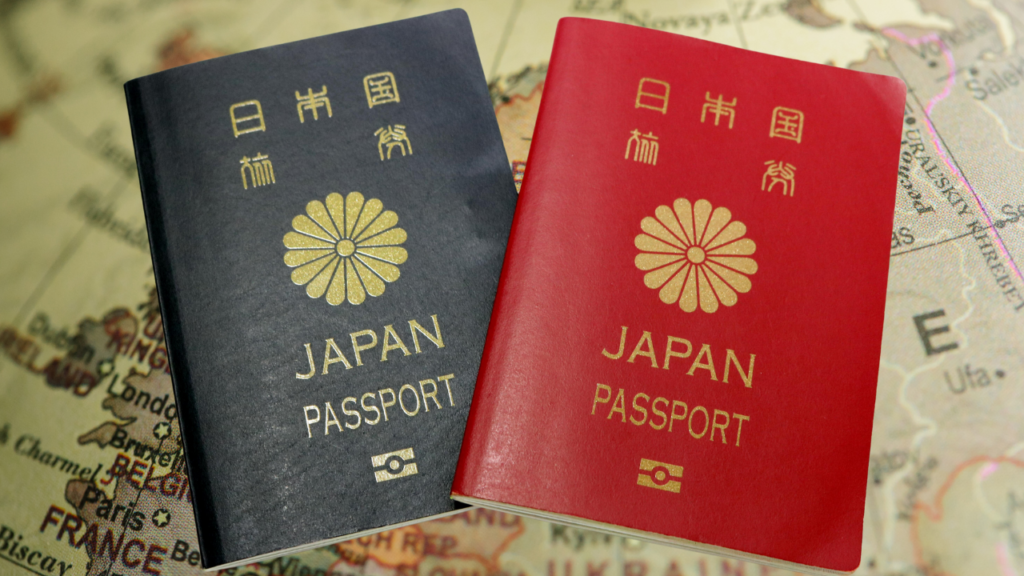
A background check for naturalization typically reviews only one year of tax and insurance payments, whereas permanent residency applicants face scrutiny over five years of tax history and two years of insurance.
Justice Minister Keisuke Suzuki acknowledged this discrepancy in May, stating it would be “clearly inappropriate” if naturalization were the less stringent path.
He affirmed that “Both pathways should involve strict evaluations” and that the government would review the legal framework for consistency.
Hirofumi Yanagase of Nippon Ishin, who raised this issue, called for legislative changes, arguing that naturalization, which grants voting rights and access to a powerful passport, should not have lighter requirements than permanent residency.
Source: LDP

If you enjoyed this article, you can see more from us directly in your Google feed by adding us as a preferred source.
This post may contain affiliate links, and Essential Japan may earn a commission if you purchase through them.