
New One Piece art reveals Chopper’s hat is based on British 90s music legends

One Piece fans have been charmed by a humorous new image of Chopper shared on X, leading many to suggest that the source of inspiration for Chopper’s iconic hat has been revealed.
The artwork depicts Tony Tony Chopper, the reindeer-doctor of the Straw Hat Pirates, comically imitating the British funk and acid jazz band Jamiroquai, referencing the music video for their iconic 1996 hit, “Virtual Insanity”.
“One Piece” began serialization in Weekly Shonen Jump in 1997 and follows the adventures of Monkey D. Luffy, a young man whose body turned to rubber after he accidentally ate a Devil Fruit.

His dream is to become the King of the Pirates by finding the legendary treasure known as the “One Piece”.
Along his journey, he gathers a crew known as the Straw Hat Pirates, including Chopper, who, after eating a Human-Human Devil Fruit, gained human intelligence and the ability to transform.
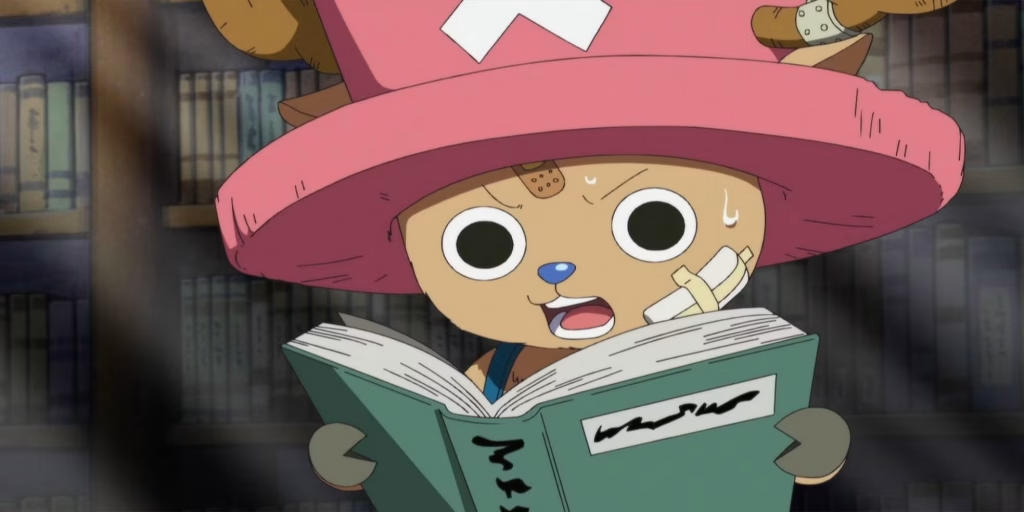
Chopper is easily recognizable by his large hat with an X-shaped mark, a detail that plays into the humor of the new illustration.
Jamiroquai, fronted by the charismatic Jay Kay, rose to international fame in the 1990s with their fusion of funk, acid jazz, and soul.
“Virtual Insanity” is one of their most recognizable songs, famously accompanied by a ground breaking music video directed by Jonathan Glazer.

The video features Jay Kay dancing in a seemingly moving room, where furniture appears to glide on its own, an optical illusion achieved by moving the walls of the set around a stationary floor.
The newly released “One Piece” illustration directly references this famous music video.
The background of the artwork immediately brings to mind the distinctive moving room from the “Virtual Insanity” music video, with the accompanying “#VirtualInsanity” tag on the post leaving no doubt about the homage.
The inspiration behind the new illustration is clear, as Chopper’s signature hat bears a striking resemblance to the oversized hat sported by Jamiroquai’s lead vocalist in the music video.

This type of cross-cultural homage is not uncommon for popular franchises like “One Piece”, which often integrate references and parodies that appeal to their global audience.
Source: Official X Account

If you enjoyed this article, you can see more from us directly in your Google feed by adding us as a preferred source.
This post may contain affiliate links, and Essential Japan may earn a commission if you purchase through them.


