Review: Junji Ito’s Official Tomie Keyboard Collection Pairs Striking Horror Art With High-Quality Desk Accessories
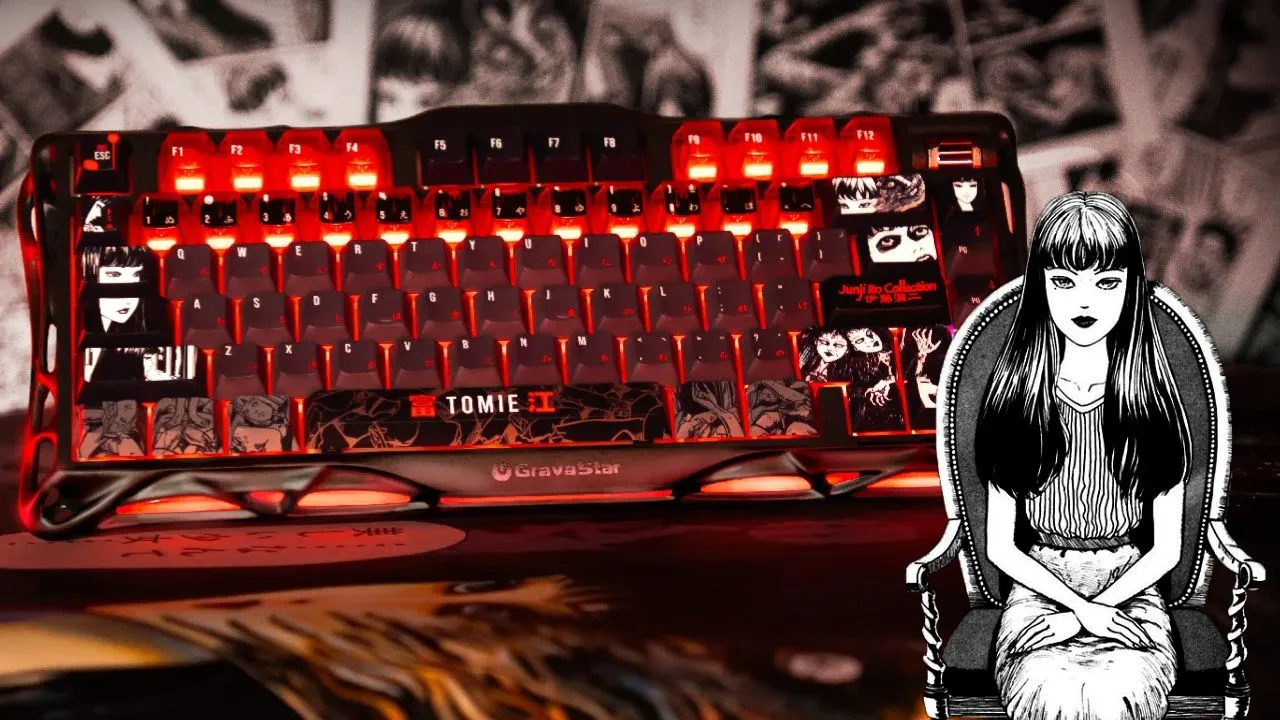 Image by James Richardson

Junji Ito’s Tomie is a surprisingly natural fit for a keyboard and desk collection, and Thekapco backs its striking manga artwork with the materials and finish needed to make these products considerably more than decorative horror merchandise.
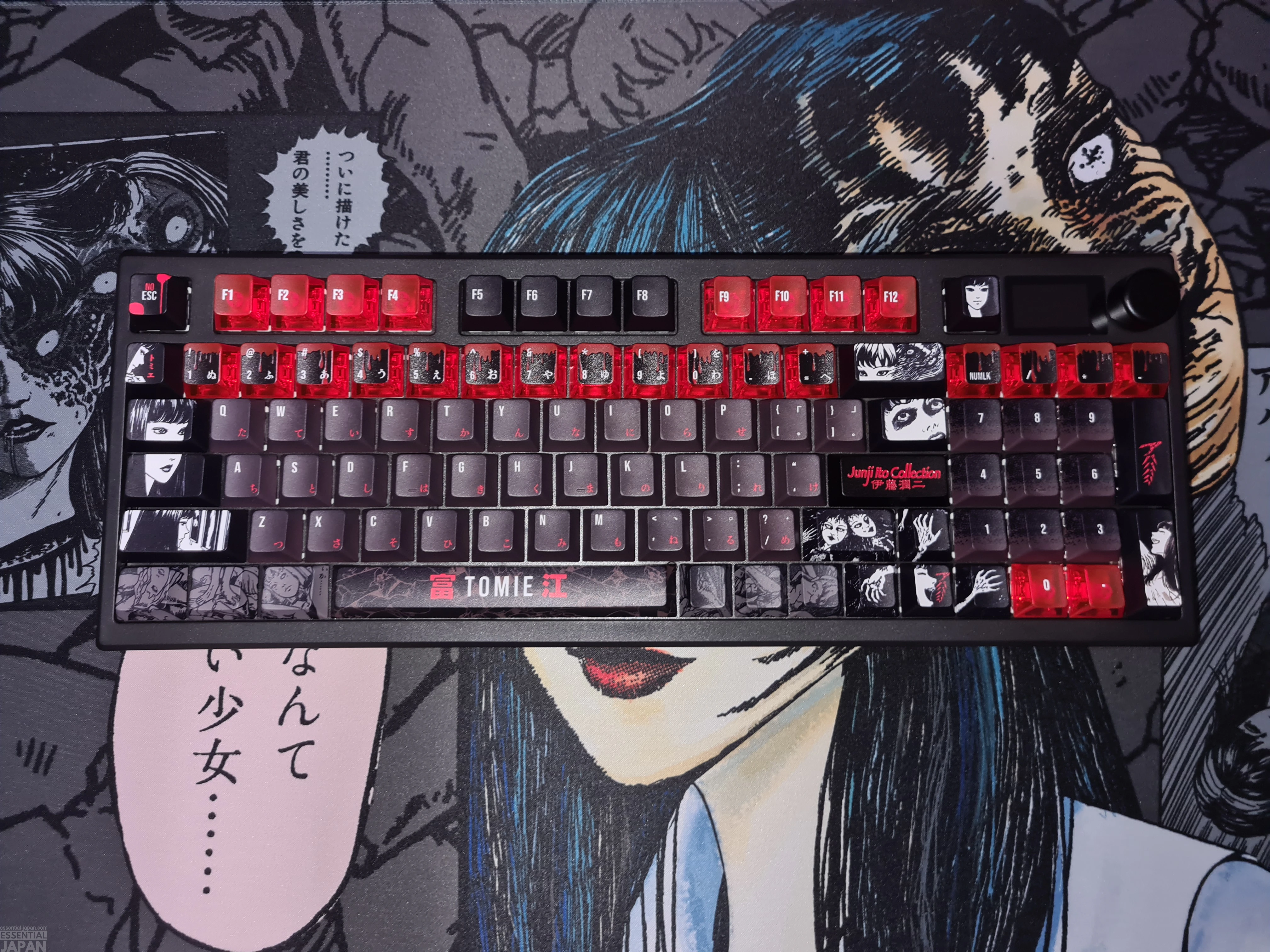
The “Thekapco x Junji Ito | Tomie” collection spans a 136-key keycap set, large deskmat, dedicated mousepad and limited aluminum single keycap, creating a coordinated setup built around some of the character’s most memorable imagery.
For this review, the complete Tomie range was paired with Thekapco’s separately sold PLAY 1800 mechanical keyboard, which proved to be an excellent platform for testing the keycaps while also offering an opportunity to take a closer look at the company’s own keyboard hardware.
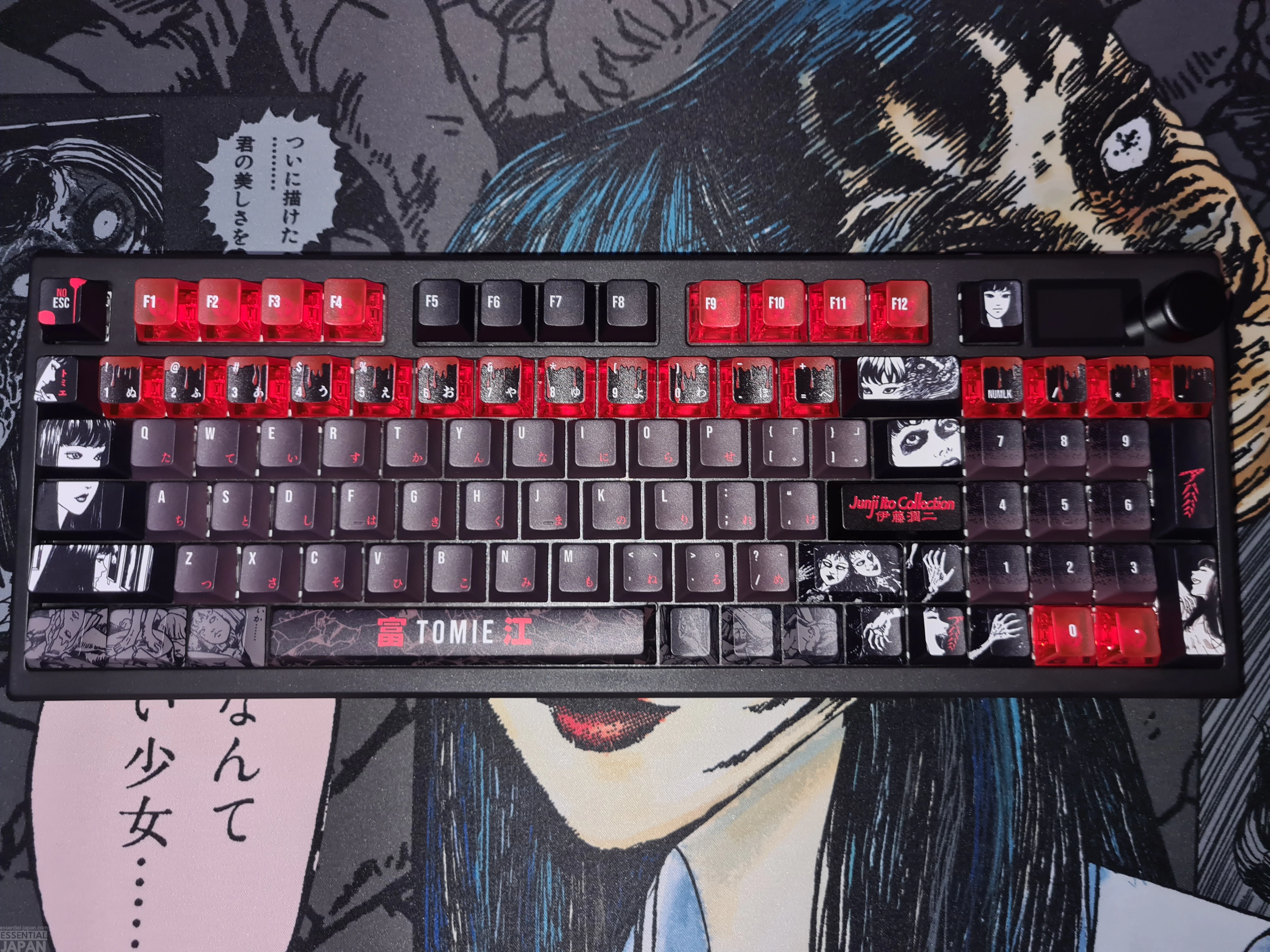
The collection is not tied to the PLAY 1800, with the keycaps designed for compatible MX-style keyboards and the desk accessories equally easy to incorporate into an existing setup.
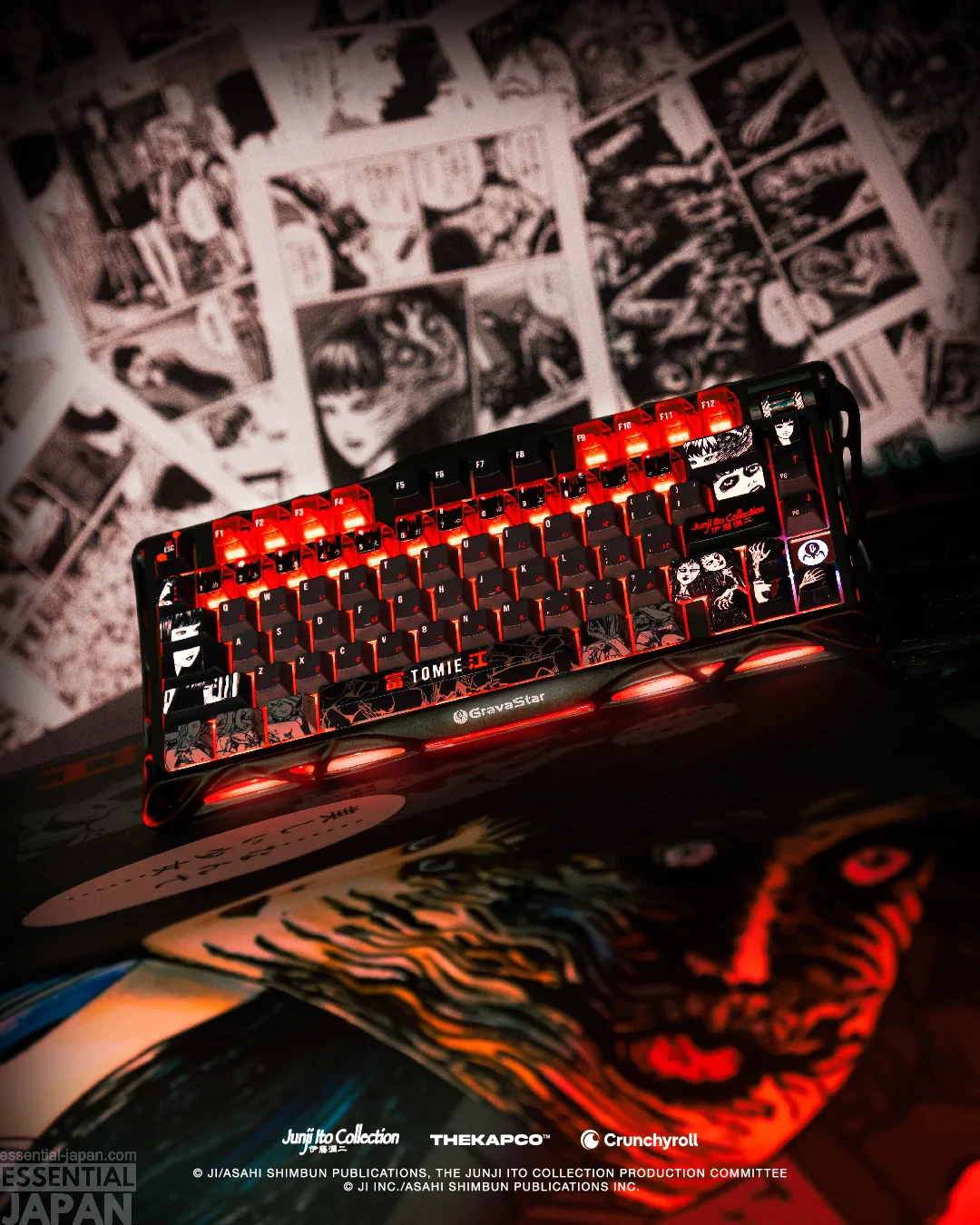
Tomie was Ito’s debut manga and remains one of his defining works, following an impossibly beautiful young woman whose regenerative abilities repeatedly return her from death while driving those around her toward obsession, violence and madness.

The character has continued to inspire a wide range of releases in 2026, including an official Universal Studios Japan collection created for Halloween Horror Nights and a Junji Ito × Sanrio fashion collection pairing Tomie with Hello Kitty.
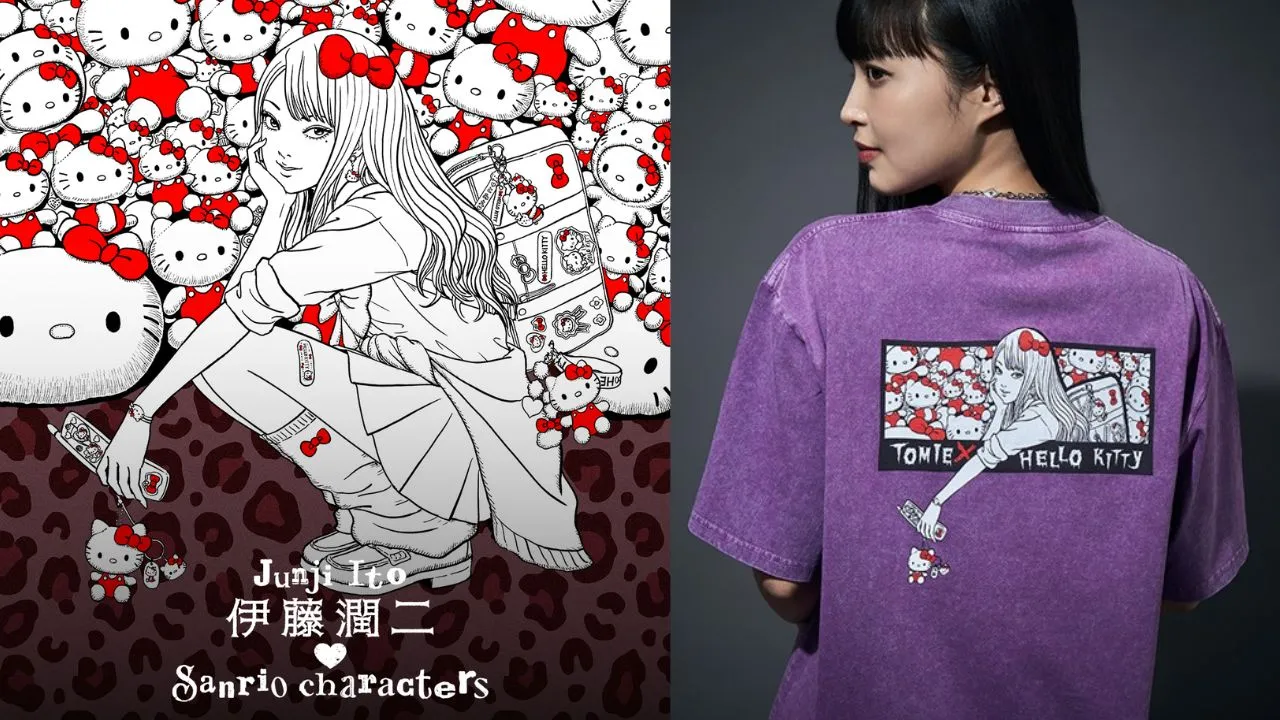 Image by James Richardson
Thekapco takes a very different route by applying Tomie’s monochrome horror imagery to equipment expected to withstand constant physical use, and the collection makes a strong first impression because the quality of the underlying products matches the strength of the artwork.

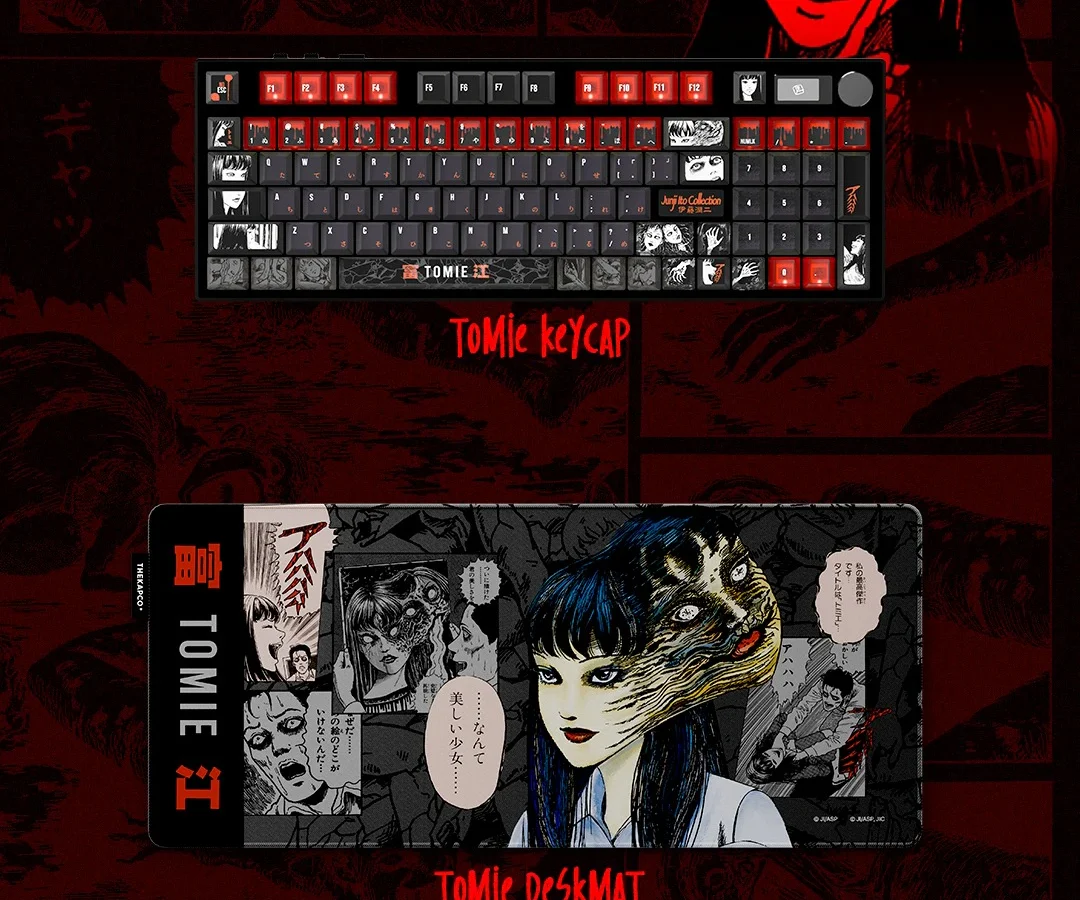
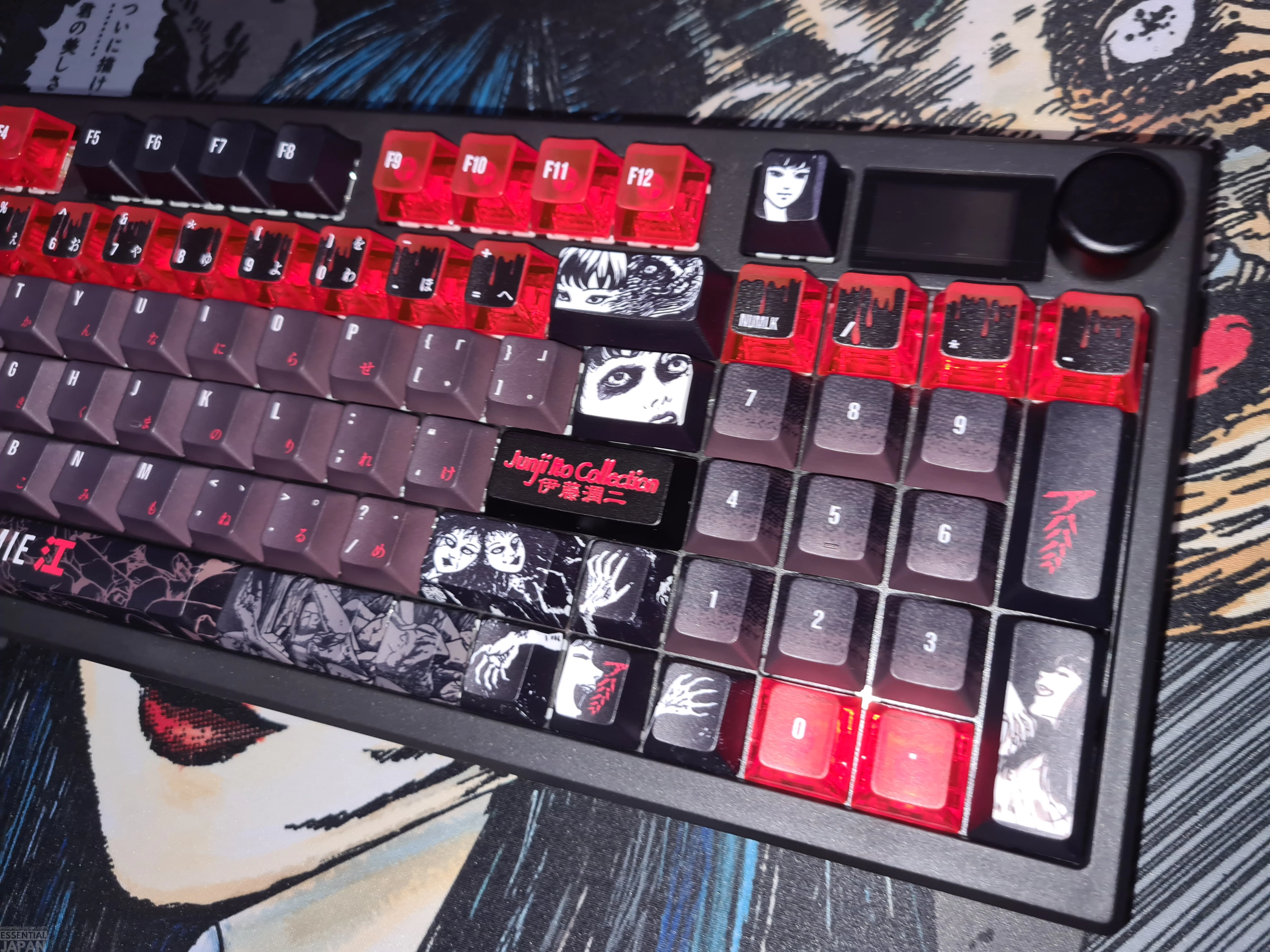
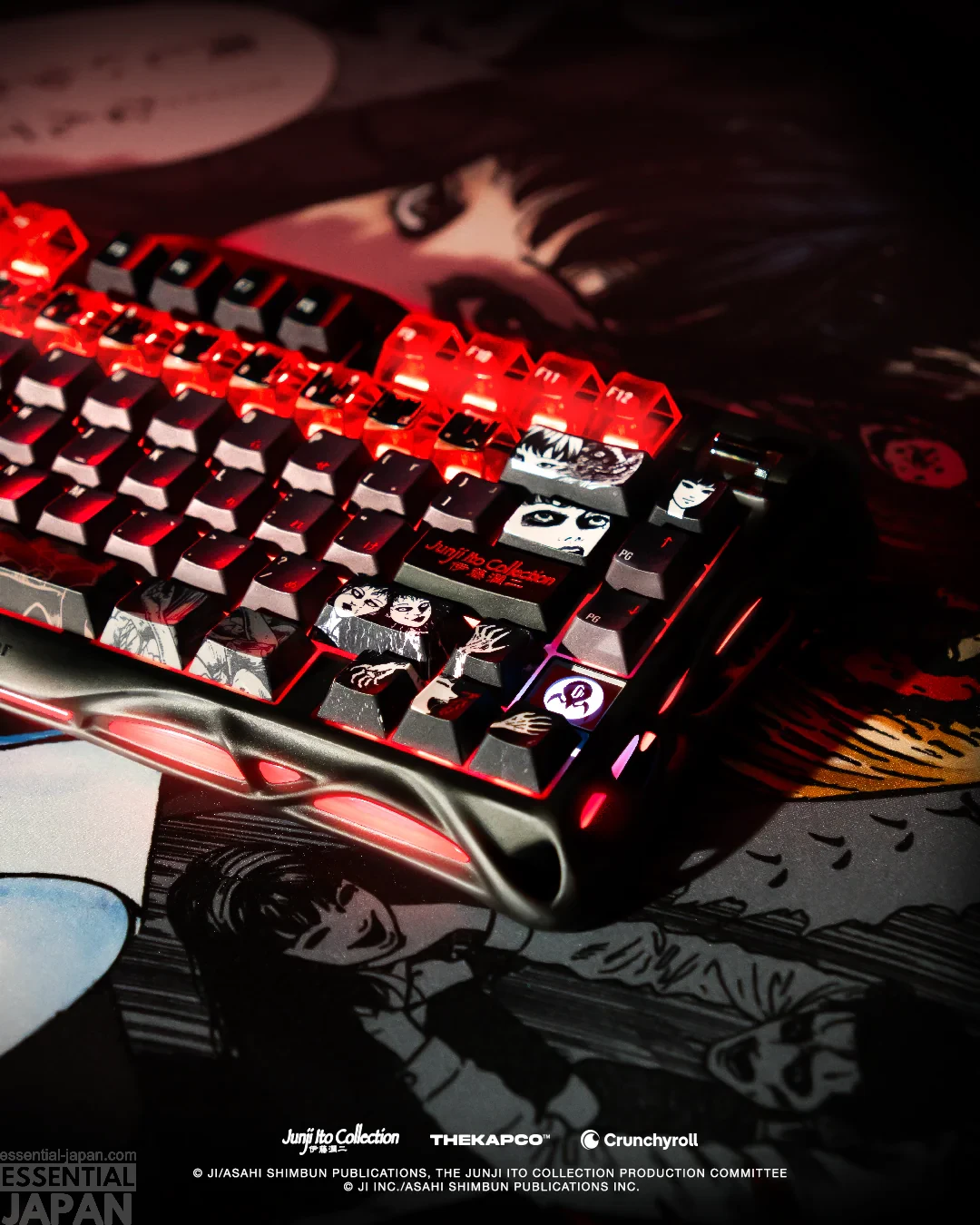
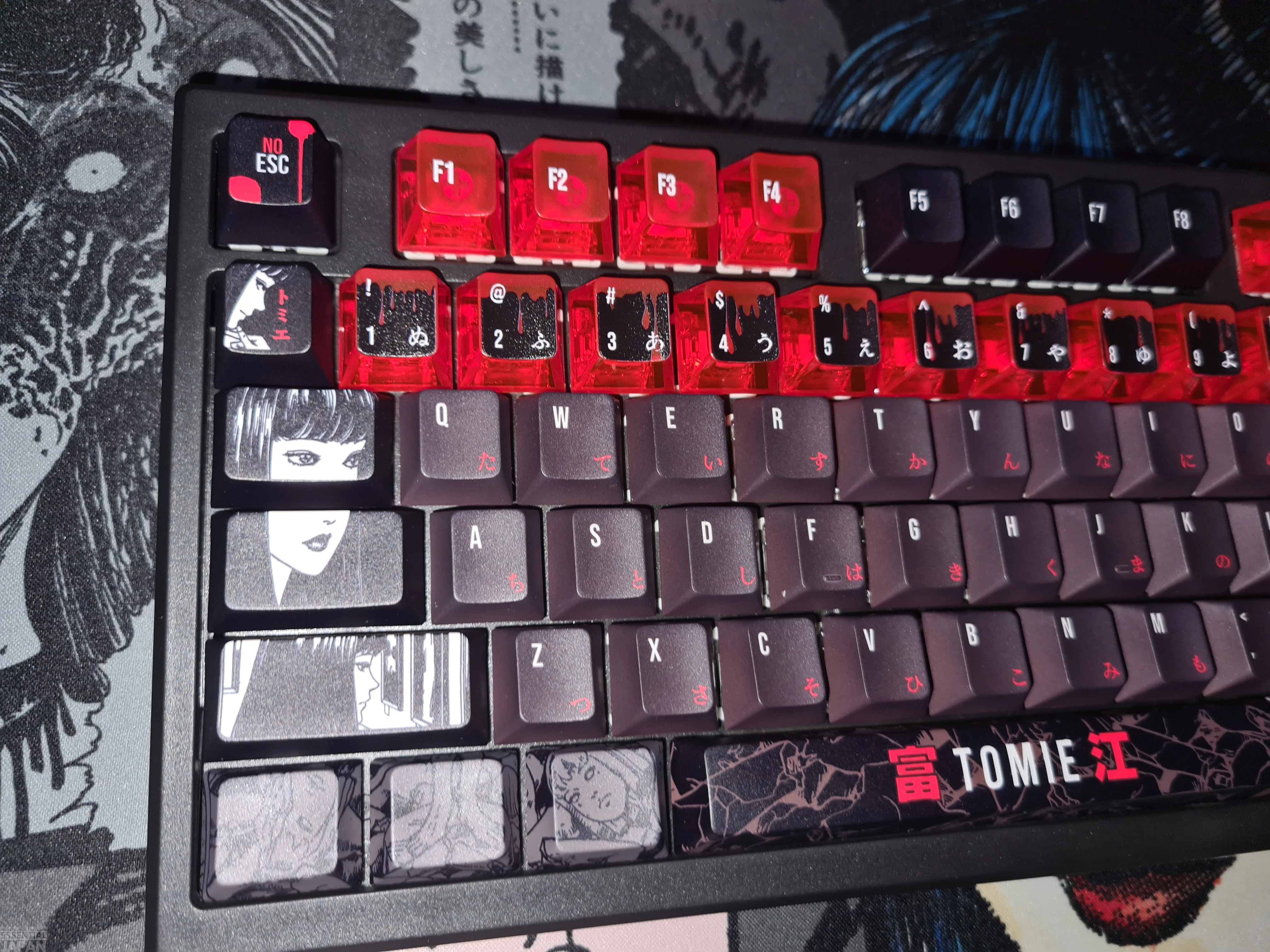
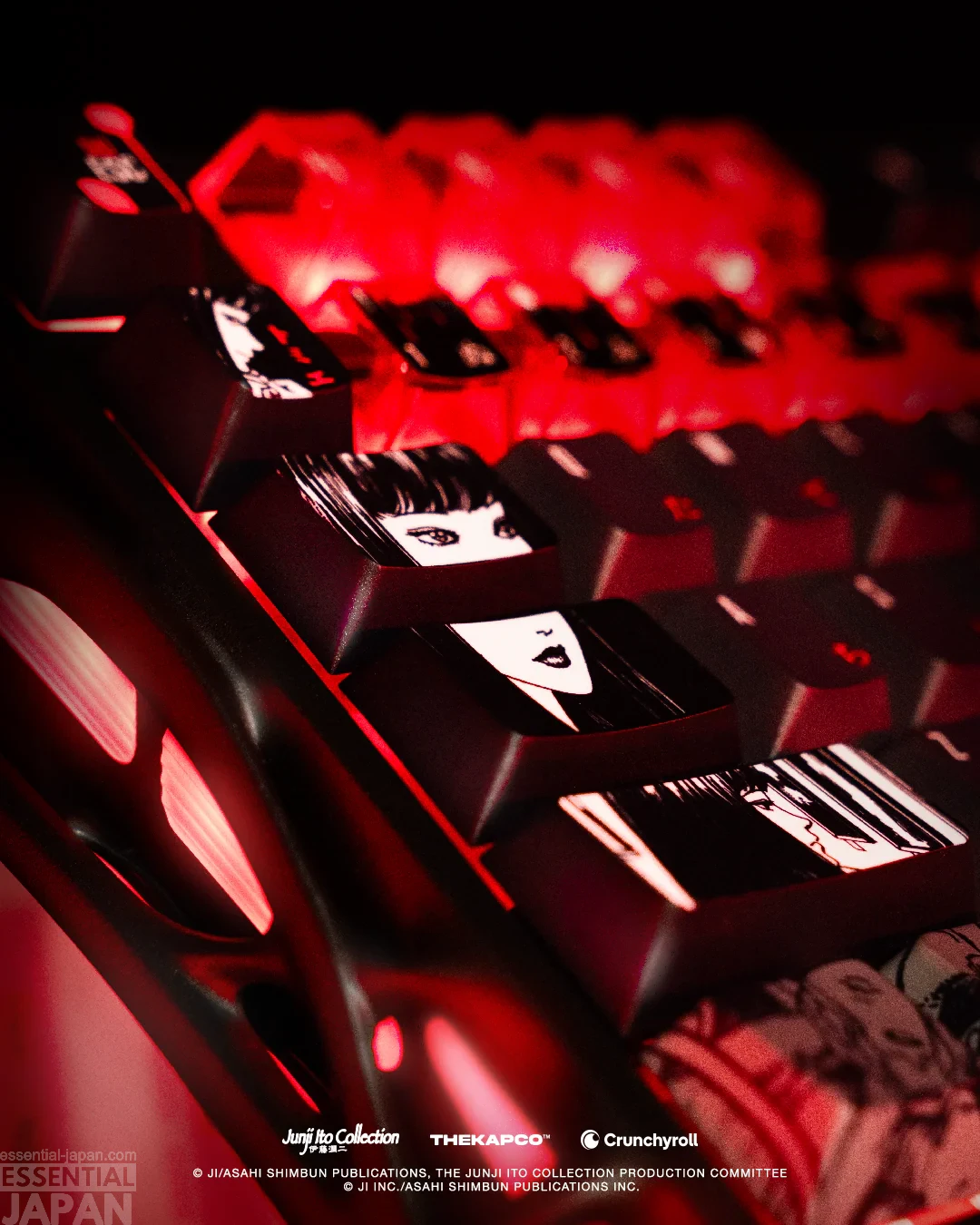
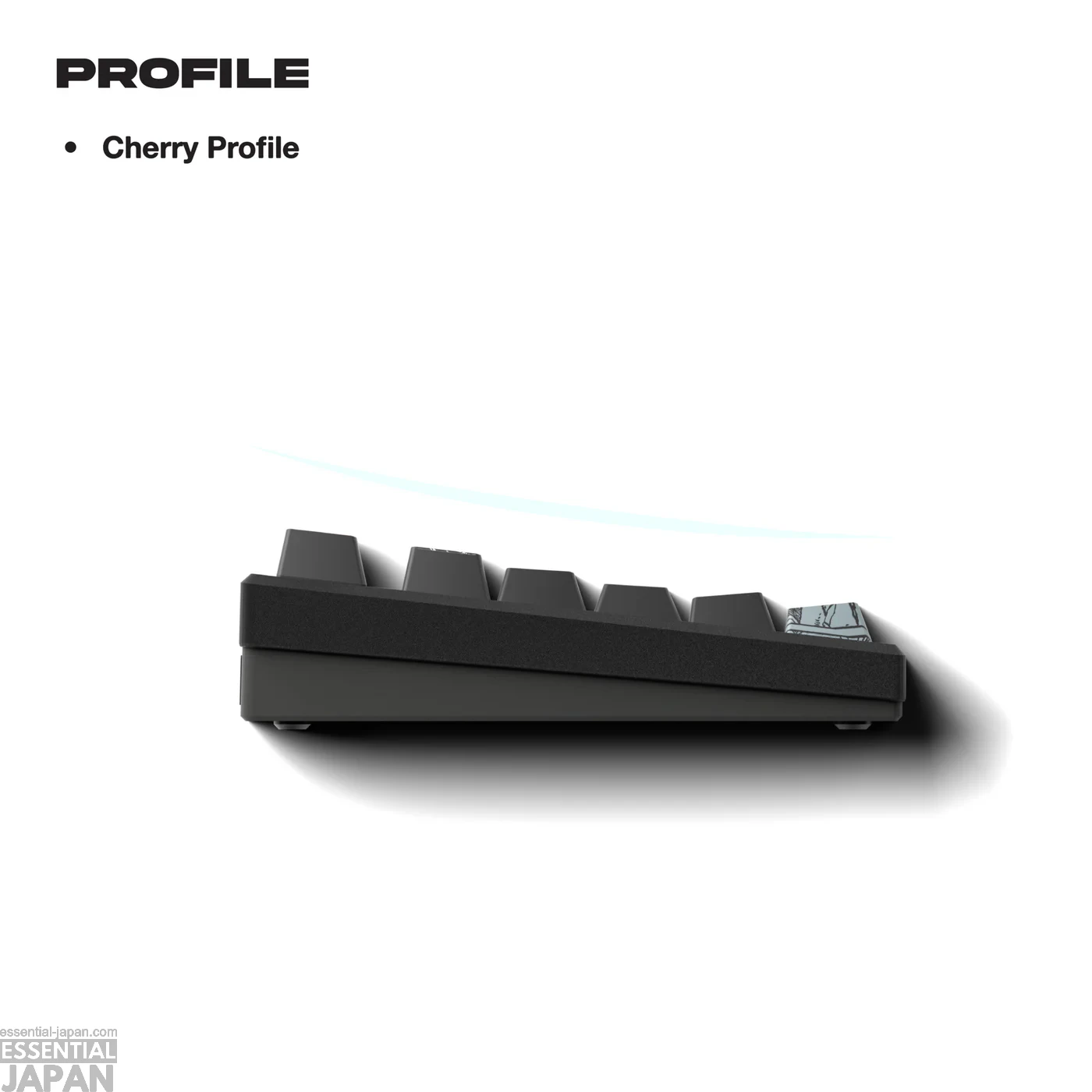
The 136-key Tomie keycap set is the centerpiece of the collection, produced from a PC and PBT combination in Cherry profile and designed for MX-style mechanical switches.
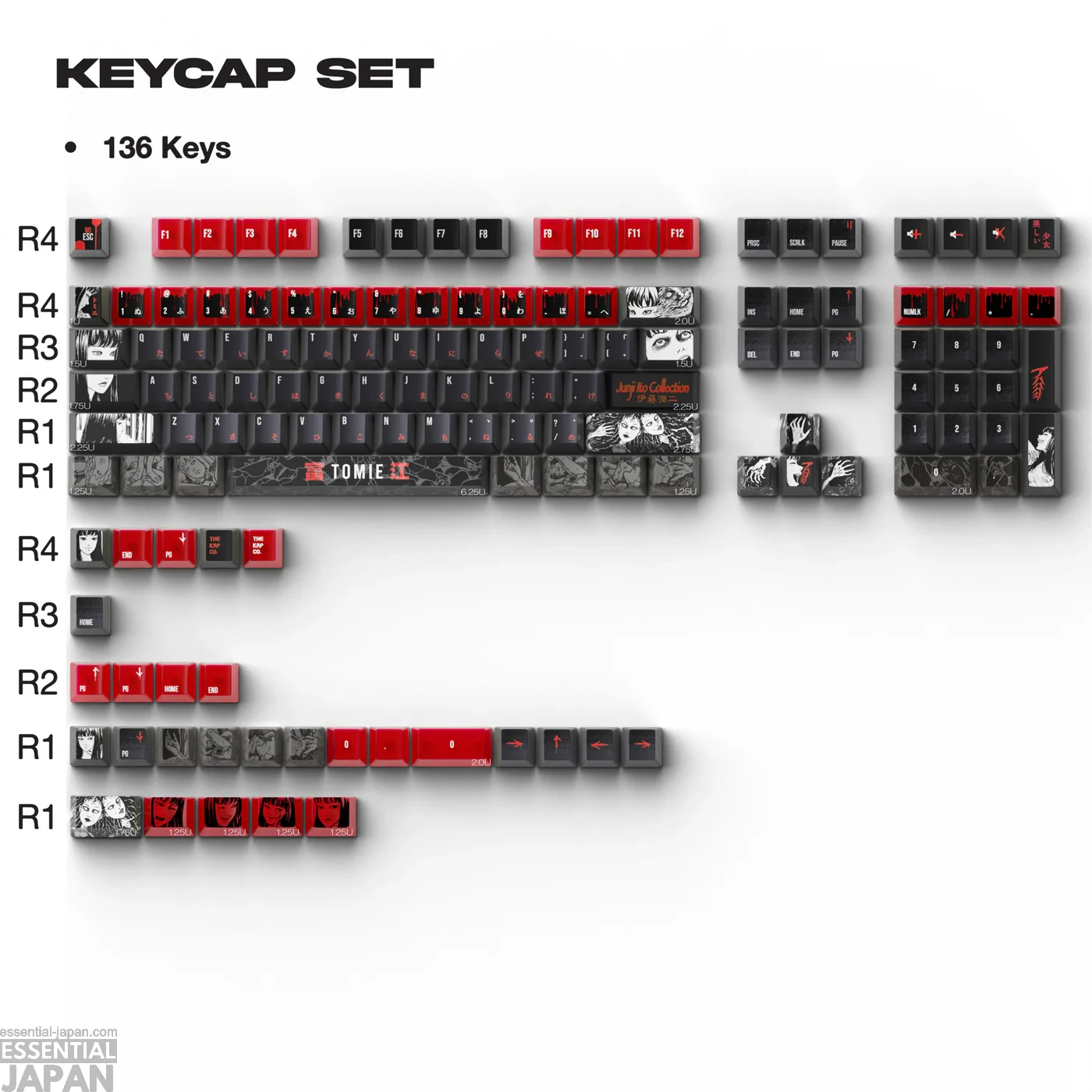
Having 136 keys gives the set far more flexibility than a keyboard-specific assortment, providing additional caps for different positions and sizes across compatible ANSI layouts rather than restricting it to a single board.
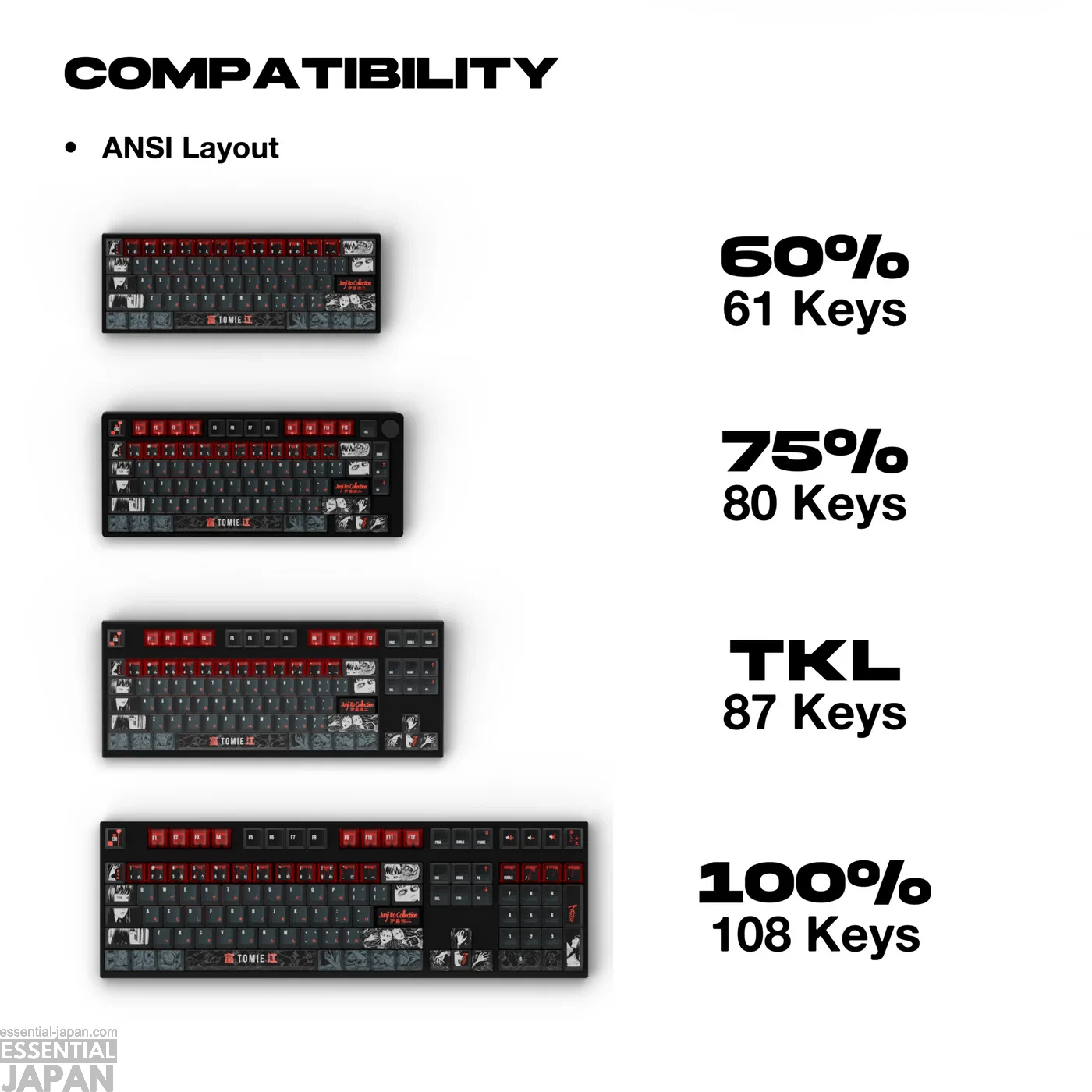
The keycaps feel appropriately solid for a licensed set at this price, while the artwork and legends remain sharp enough that the keys look like part of a cohesive keyboard rather than individual pieces of printed merchandise.
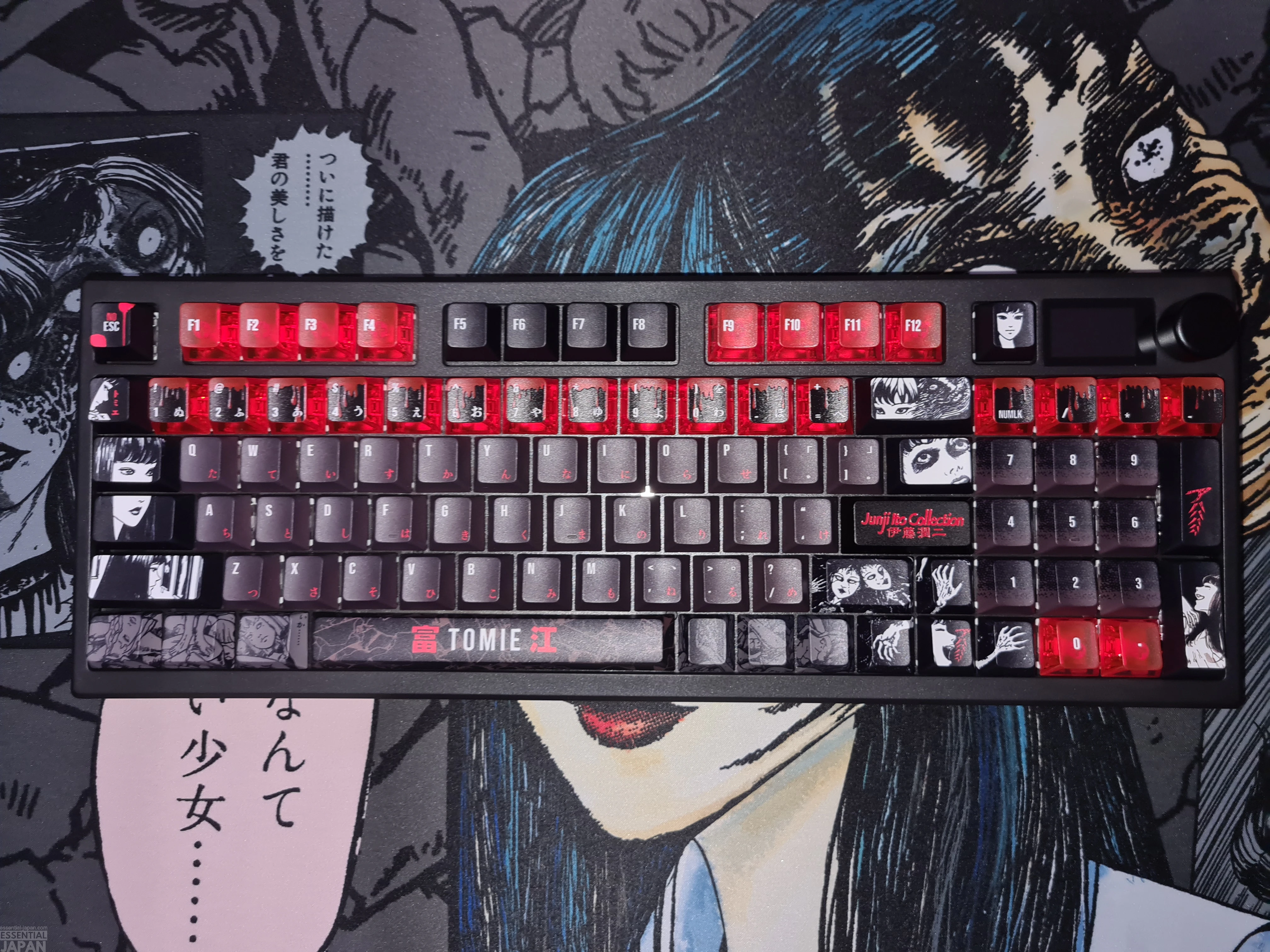
Tomie’s artwork dominates the overall design without compromising basic readability, which is an important balance for keycaps intended to remain in everyday use.
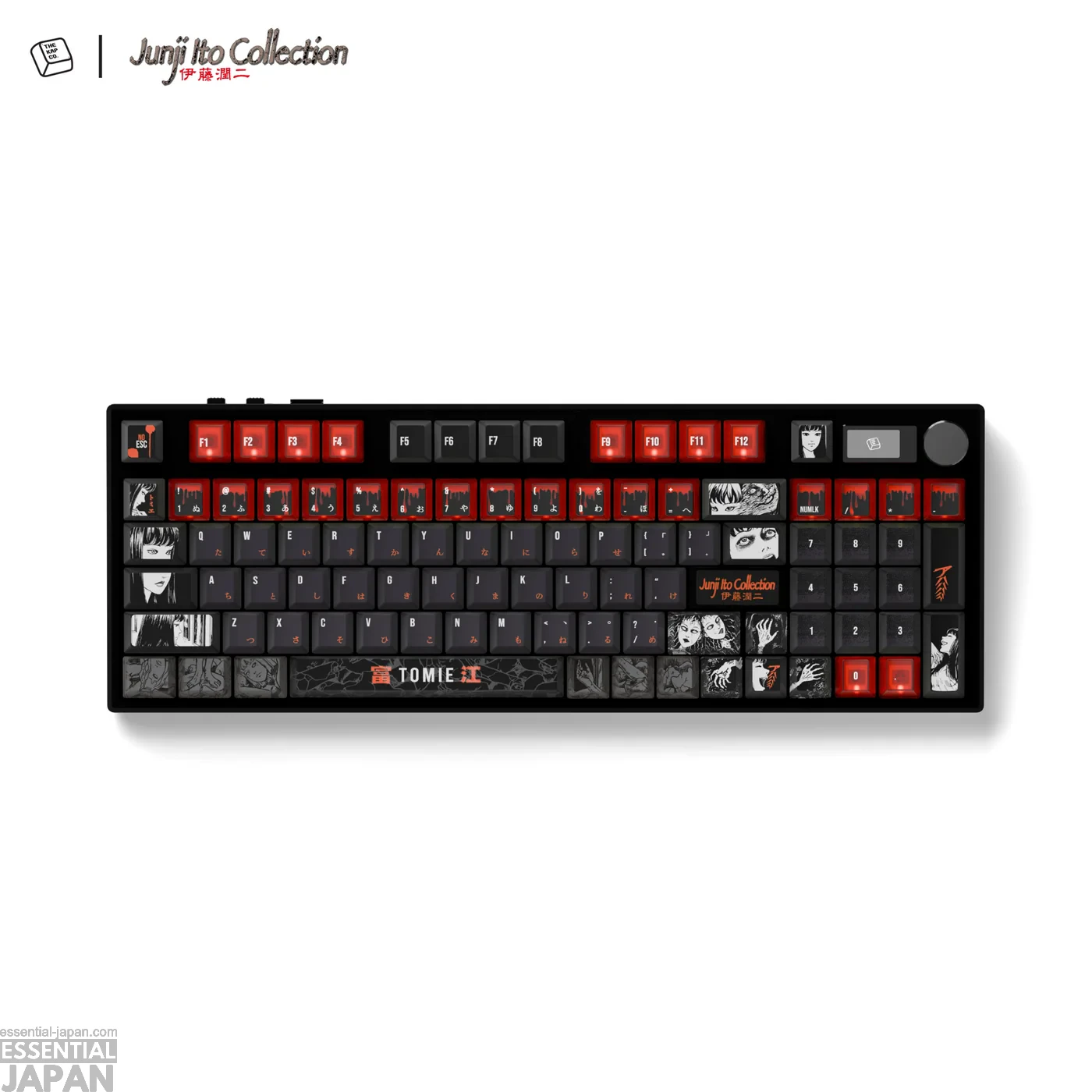
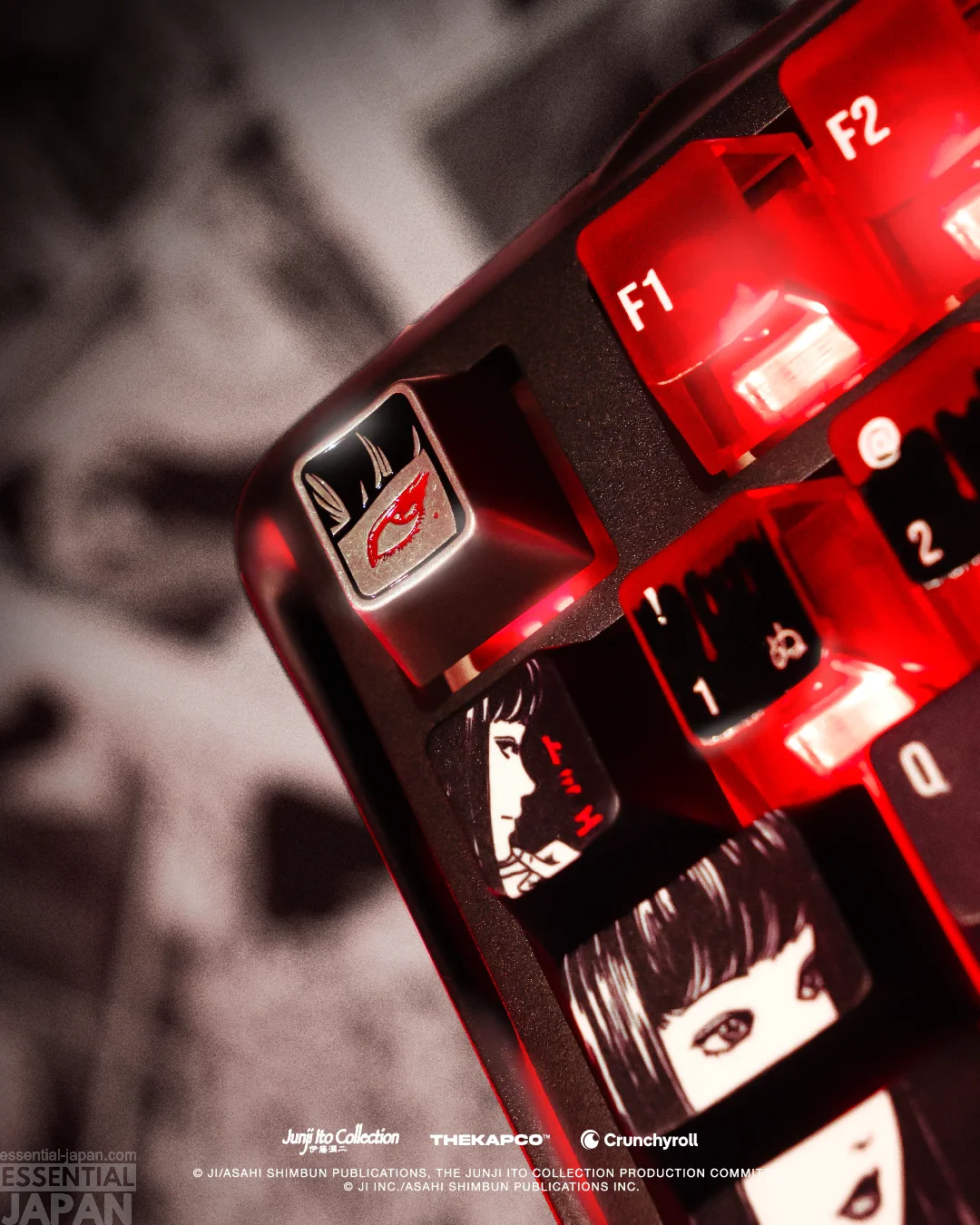
One of the best touches is the special edition aluminum Enter key included with the set, which immediately introduces a different weight, texture and finish from the surrounding PC and PBT caps.
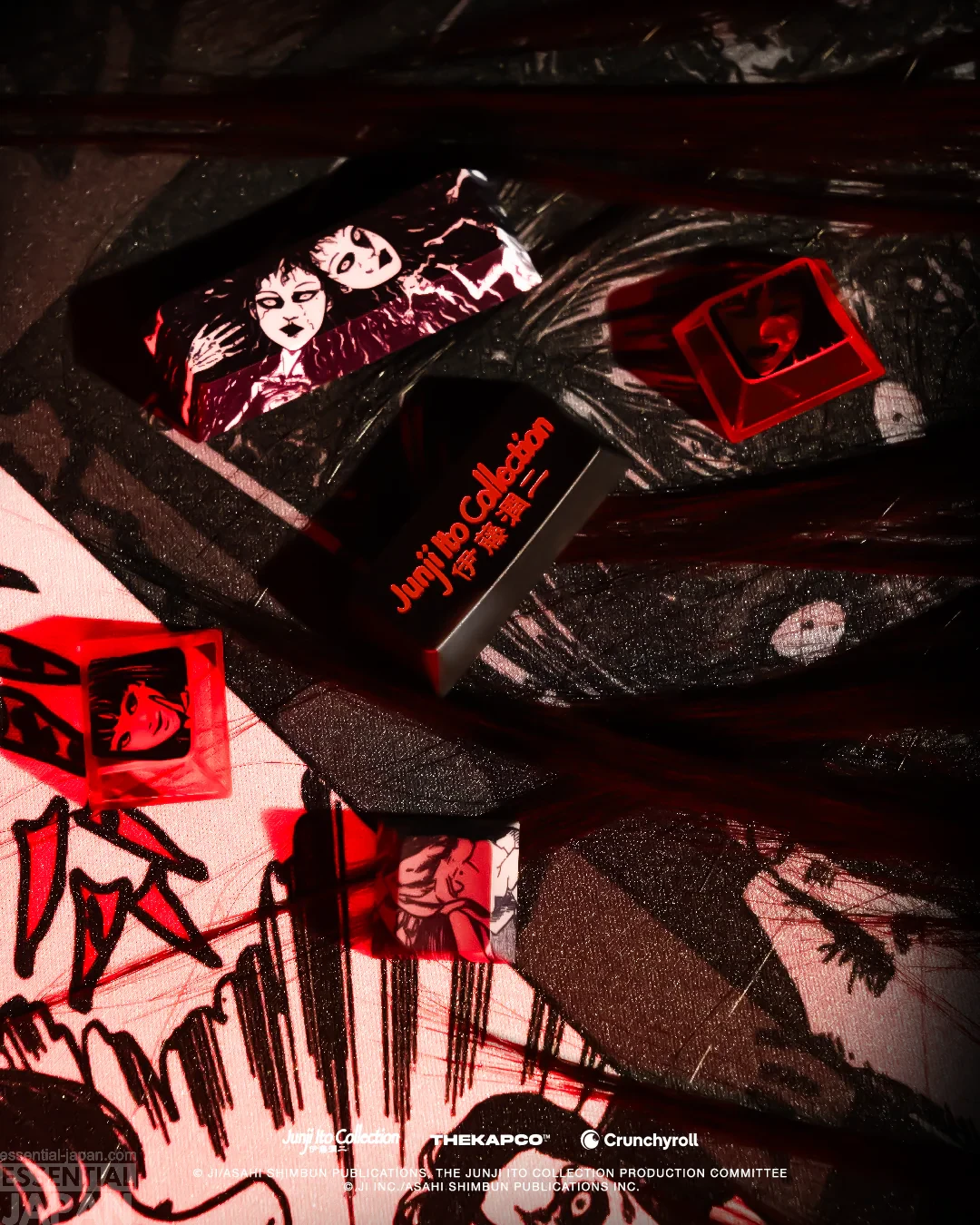
It creates a clear centerpiece without overwhelming the rest of the layout, while the metal finish gives the collection a genuinely premium detail that goes further than simply printing licensed artwork onto an existing set of plastic keycaps.
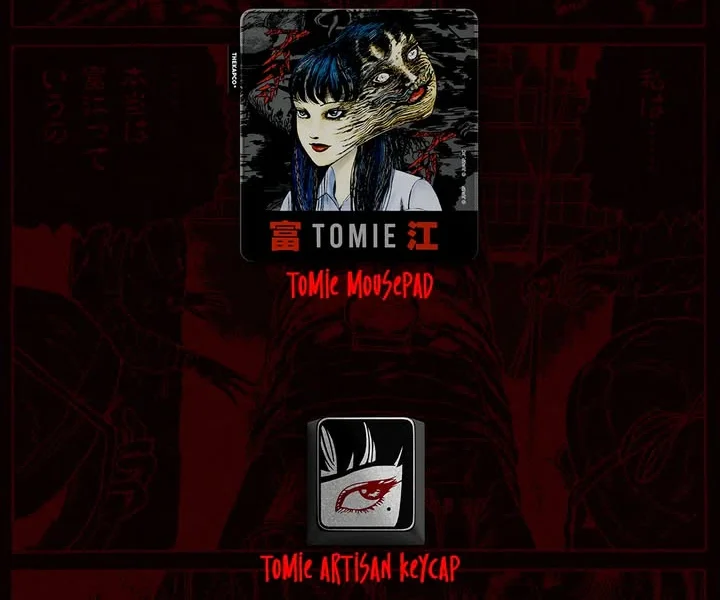
The separate Tomie single keycap takes that idea even further with a solid aluminum body and CNC engraving.
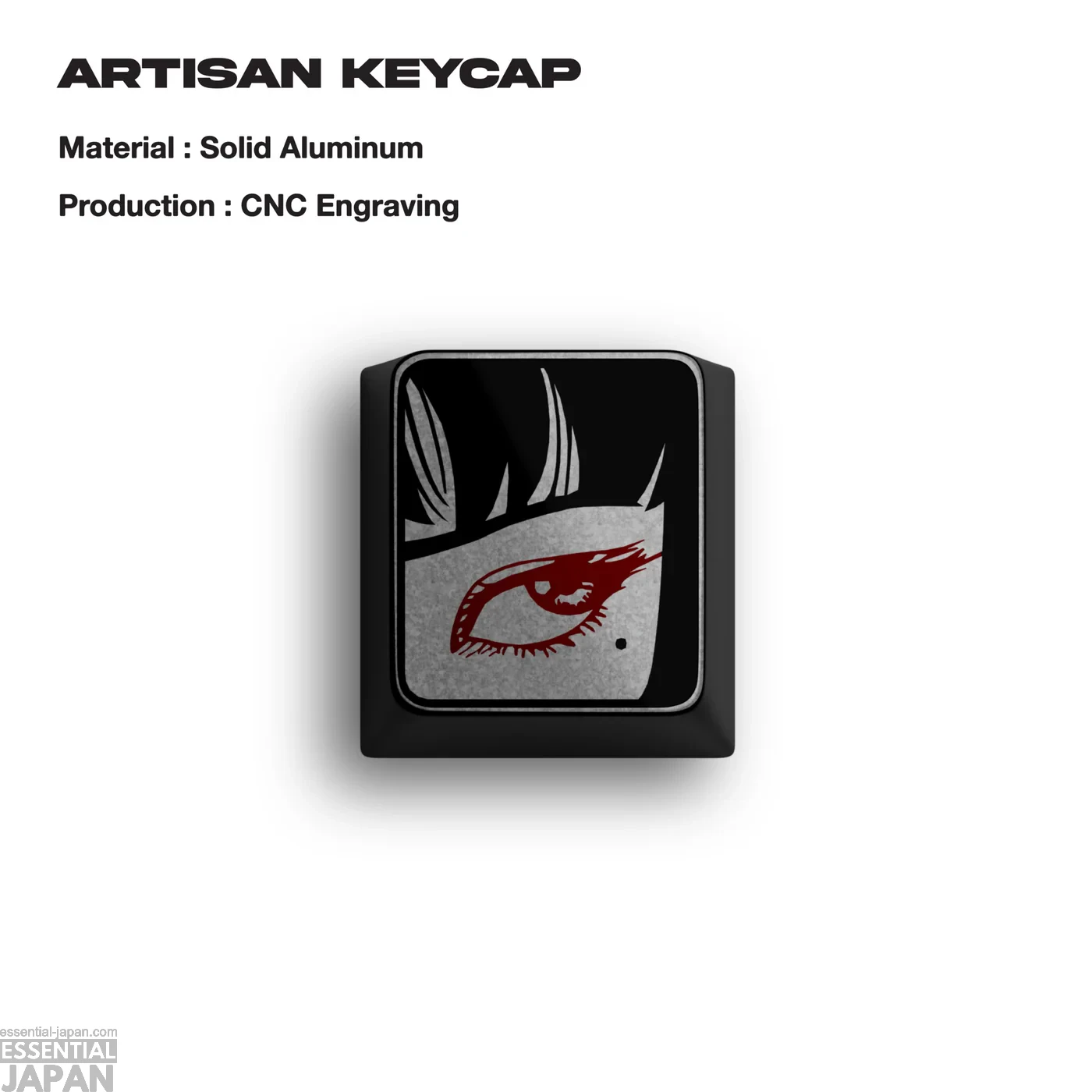
Only 500 are being produced, and its weight and metal finish make it feel much closer to an enthusiast artisan keycap than a small promotional extra.
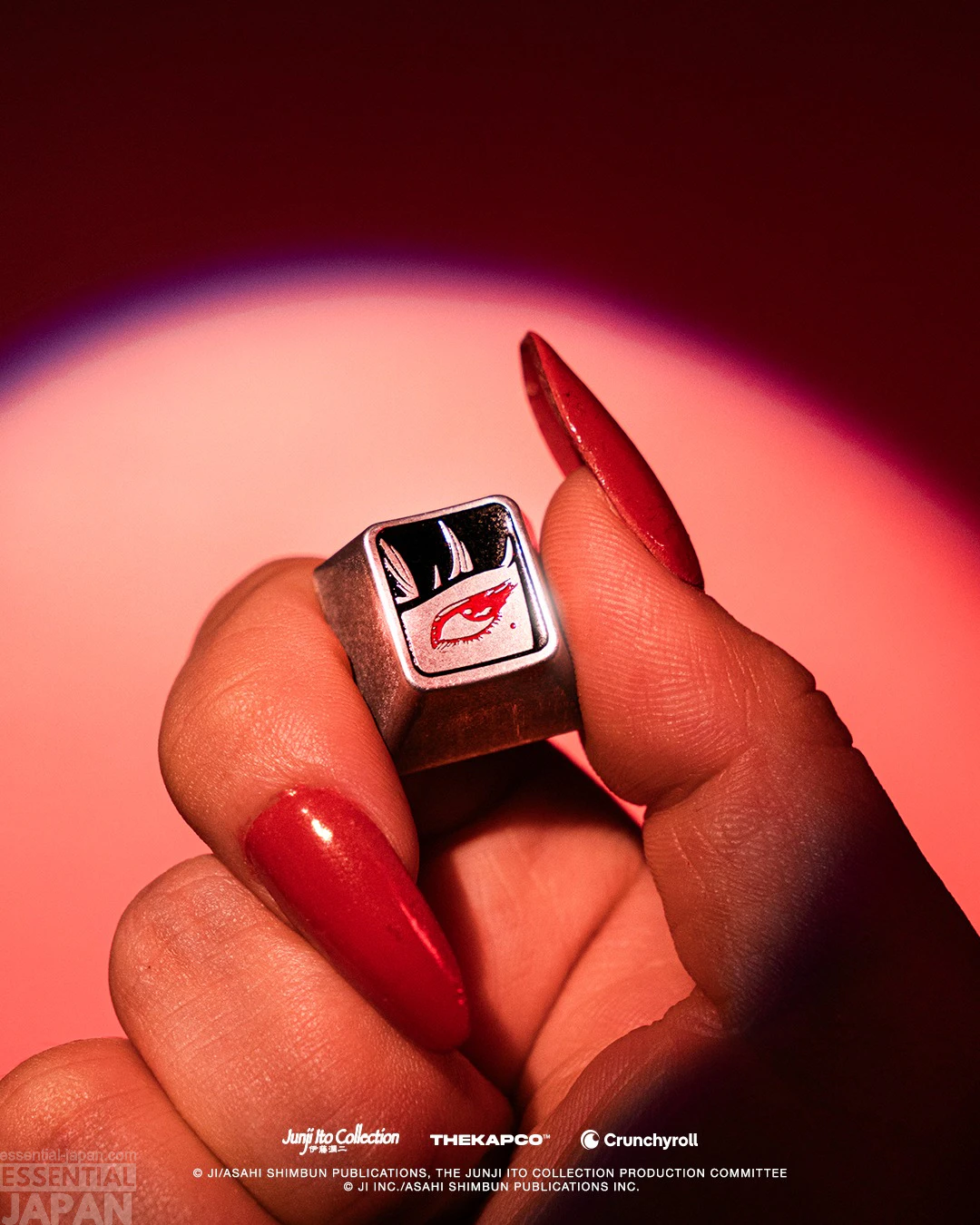
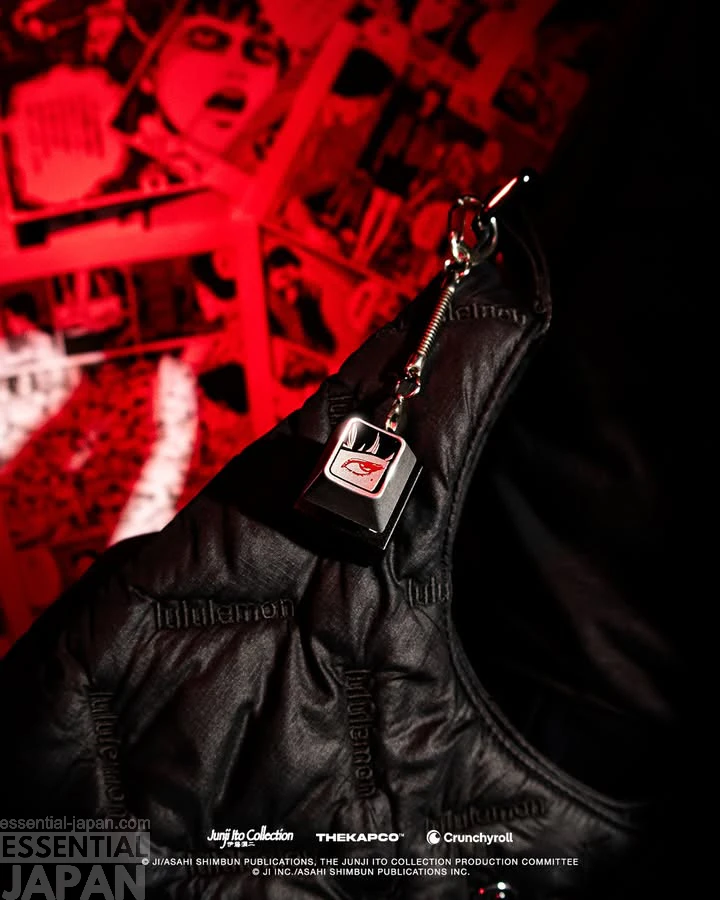
An aluminum keychain is also included with the single keycap, giving it some additional use away from the keyboard if you would rather preserve the engraved cap than keep it permanently installed.
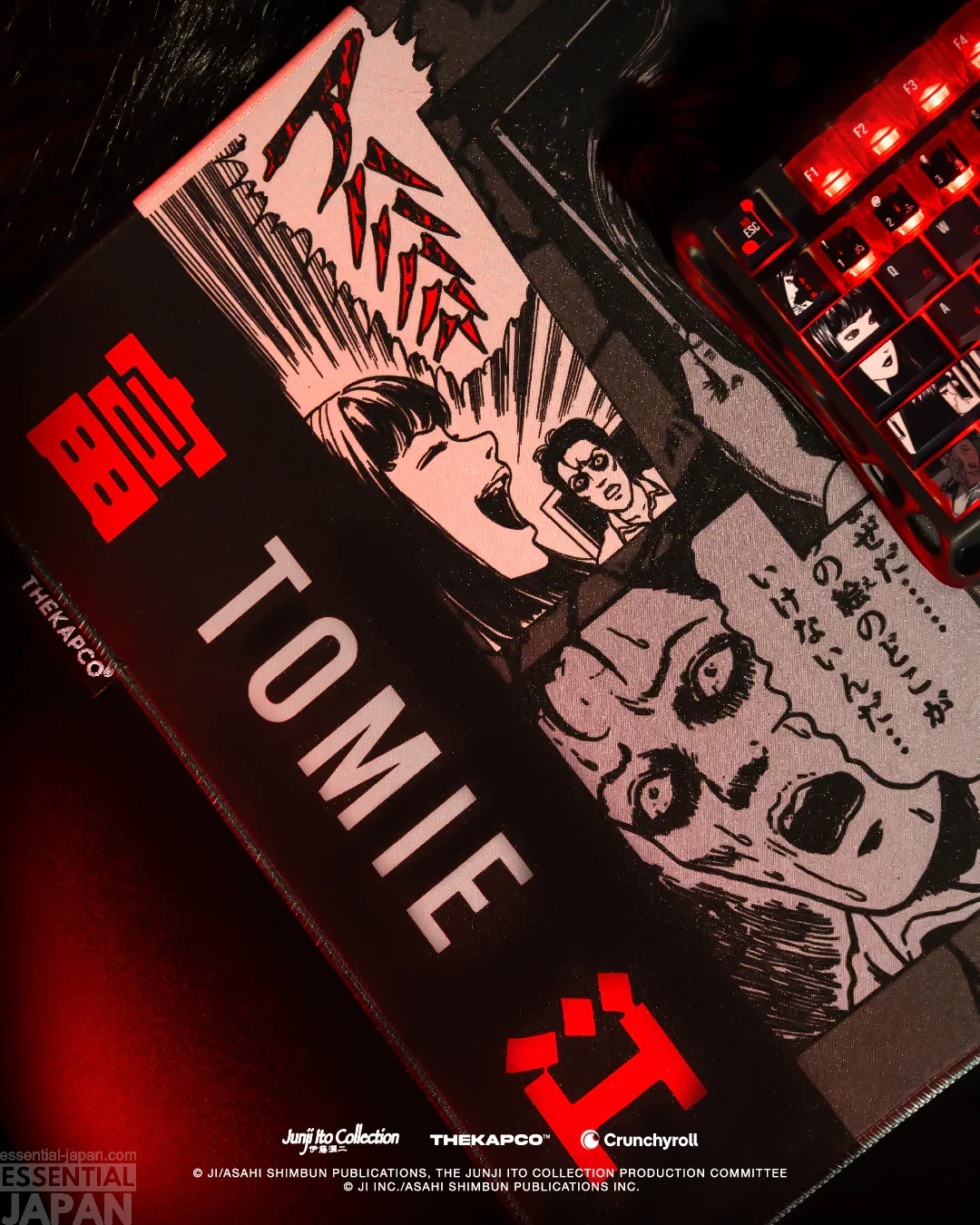
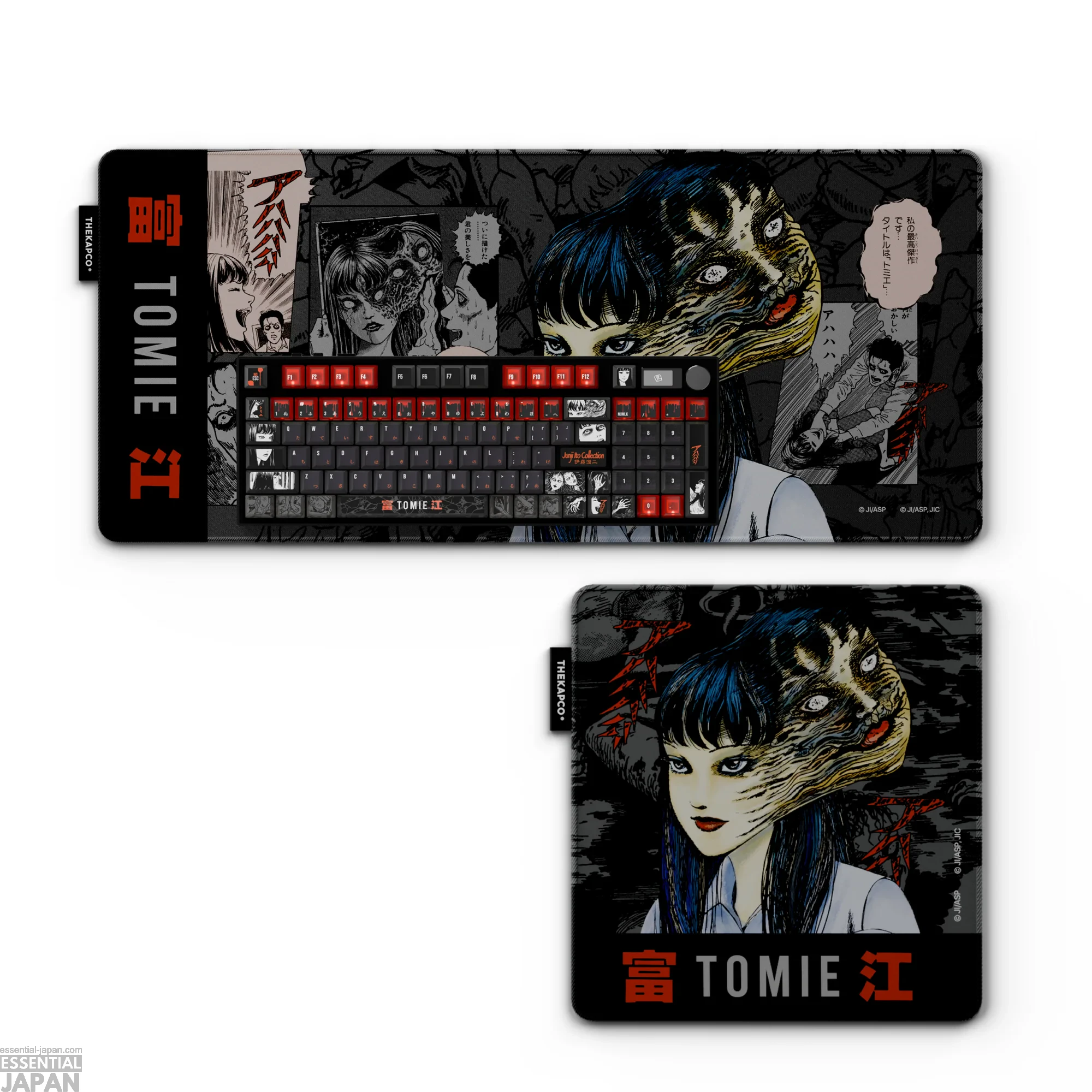
The Tomie deskmat is equally well judged from a practical perspective, measuring 90 × 40 cm with a 3 mm thickness, anti-slip rubber base and double-stitched edges.
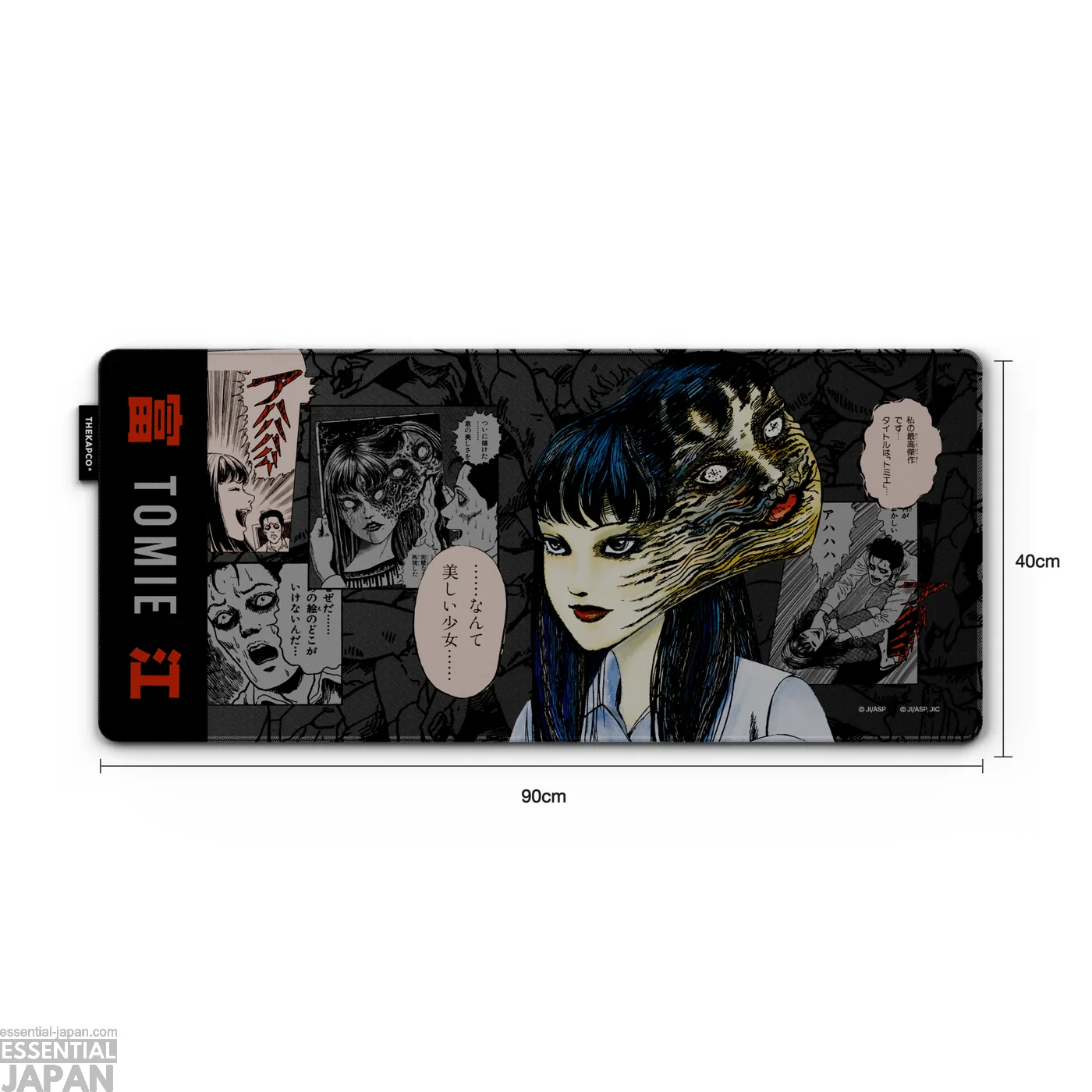
At that size it comfortably accommodates a full keyboard while still leaving a generous area for mouse movement, making the artwork part of the overall desk rather than reducing it to a small decorative panel underneath the keyboard.
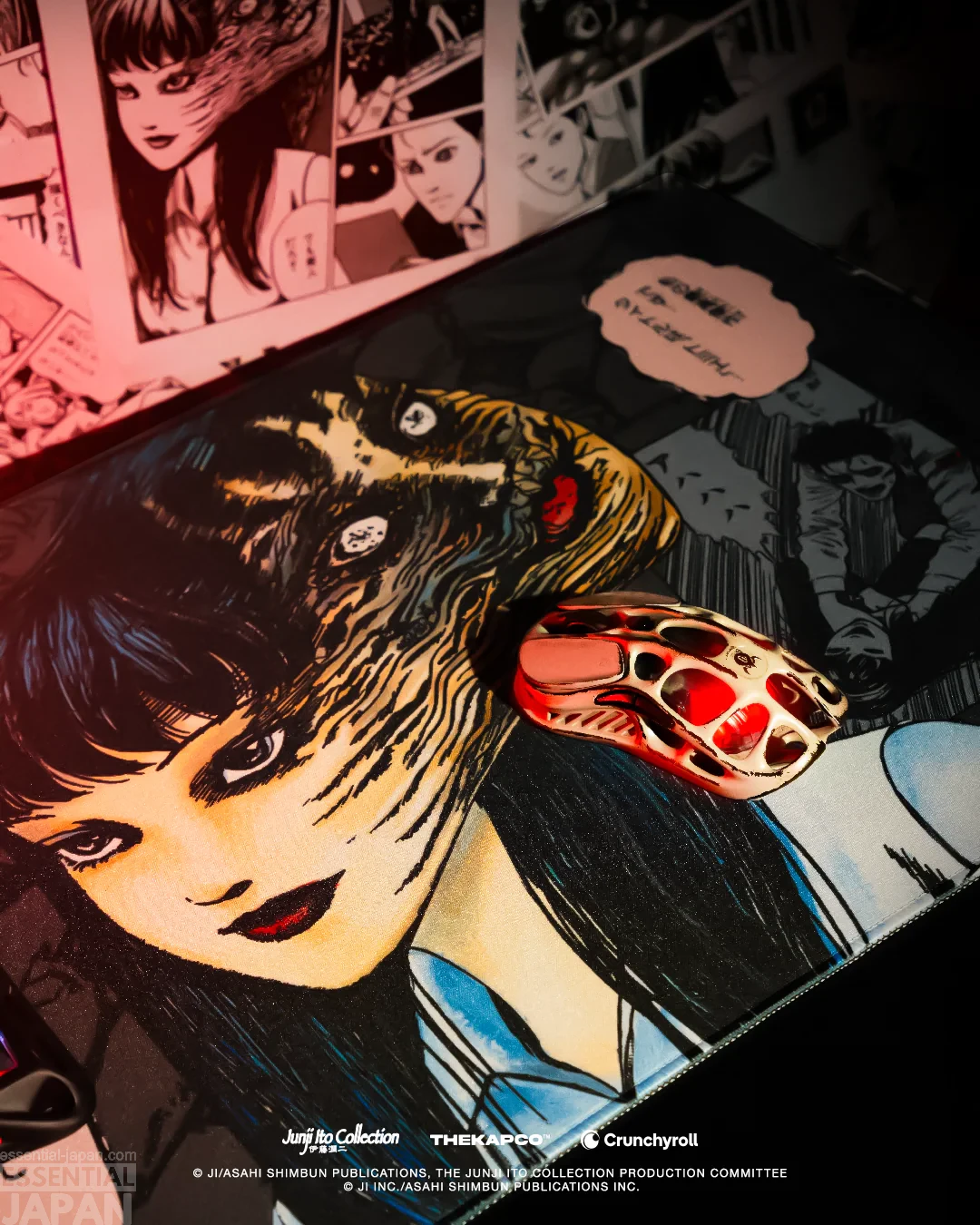
The rubber backing does a good job of preventing the mat from shifting during heavier keyboard or mouse use, while its 3 mm thickness provides enough cushioning to soften the desk surface without feeling overly padded.
Double stitching around the perimeter is also a worthwhile durability feature on a mat whose edges are likely to see constant contact with wrists and forearms.
The dedicated mousepad uses the same general material setup on a smaller 35 × 40 cm footprint, retaining the 3 mm thickness, anti-slip rubber base and double-stitched perimeter.
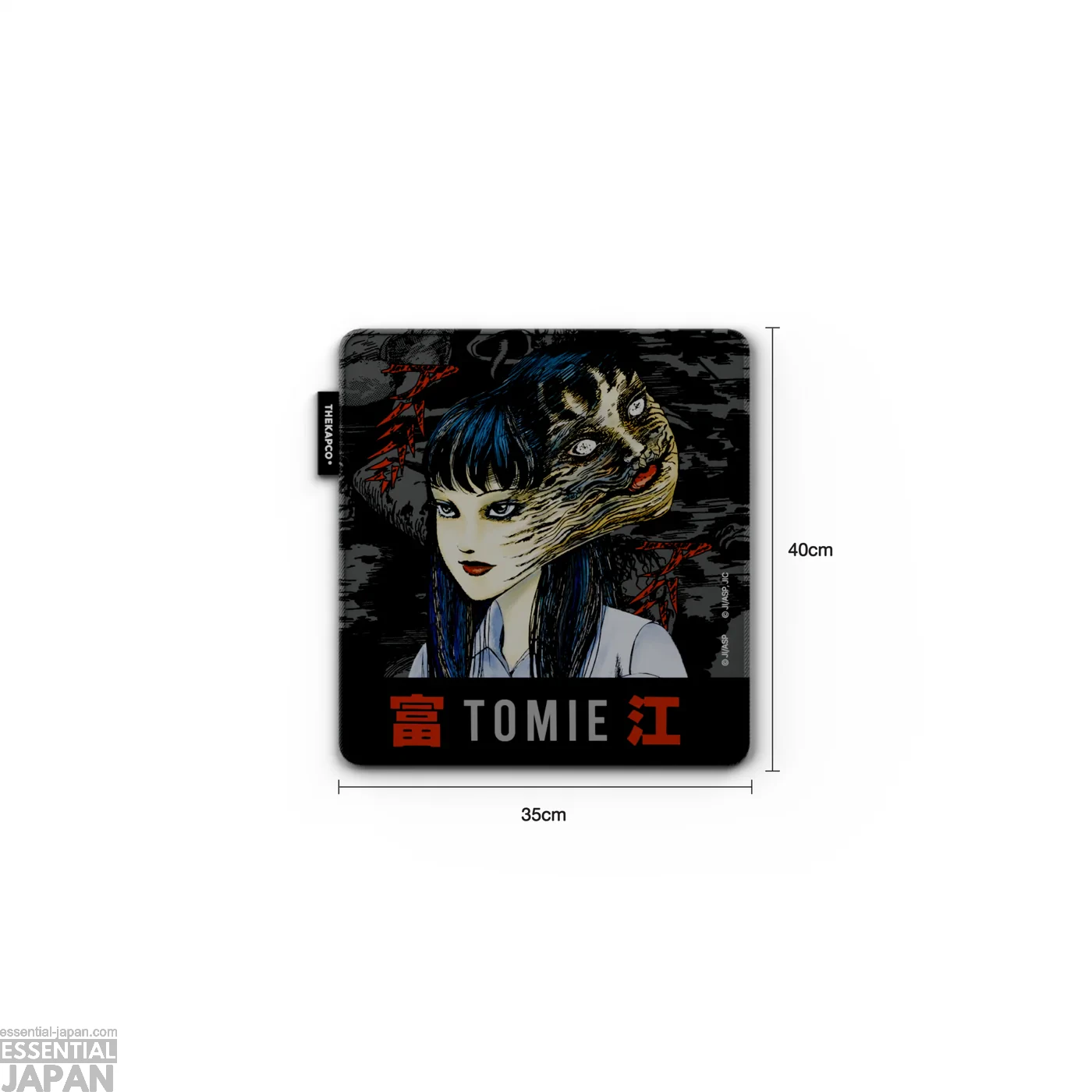
Using both surfaces at once is not essential, but the smaller pad works well if you prefer a separate replaceable mousing surface or simply do not have enough desk space for the full 90 cm deskmat.
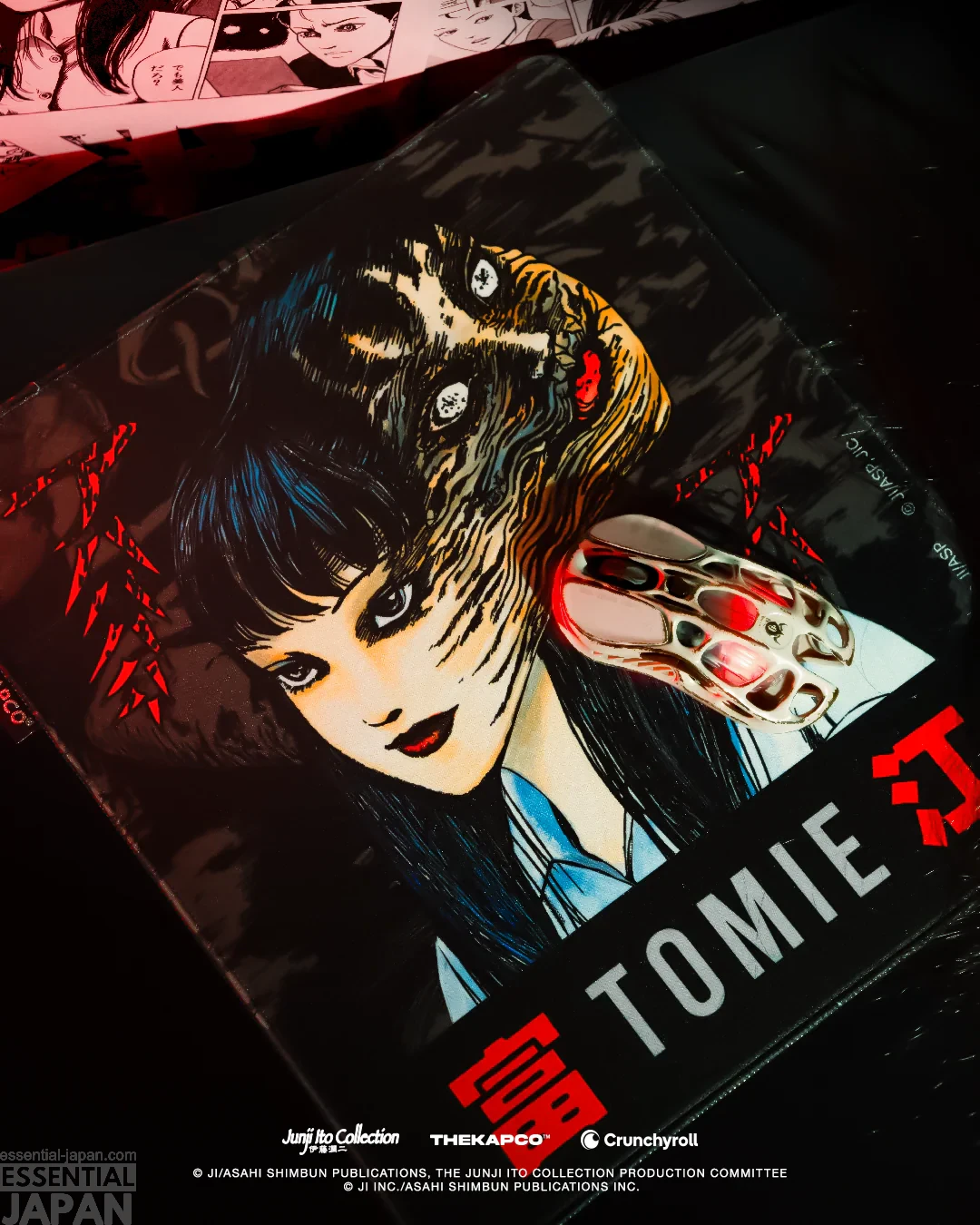
More importantly, neither feels like an afterthought added simply to expand the collaboration, with both using practical specifications that make them highly suitable as everyday desk accessories.
To test the keycap set in a complete mechanical keyboard setup, I installed it on Thekapco’s PLAY 1800, a separate 96% board measuring 37.73 cm wide, 14.03 cm deep and 4.55 cm high.
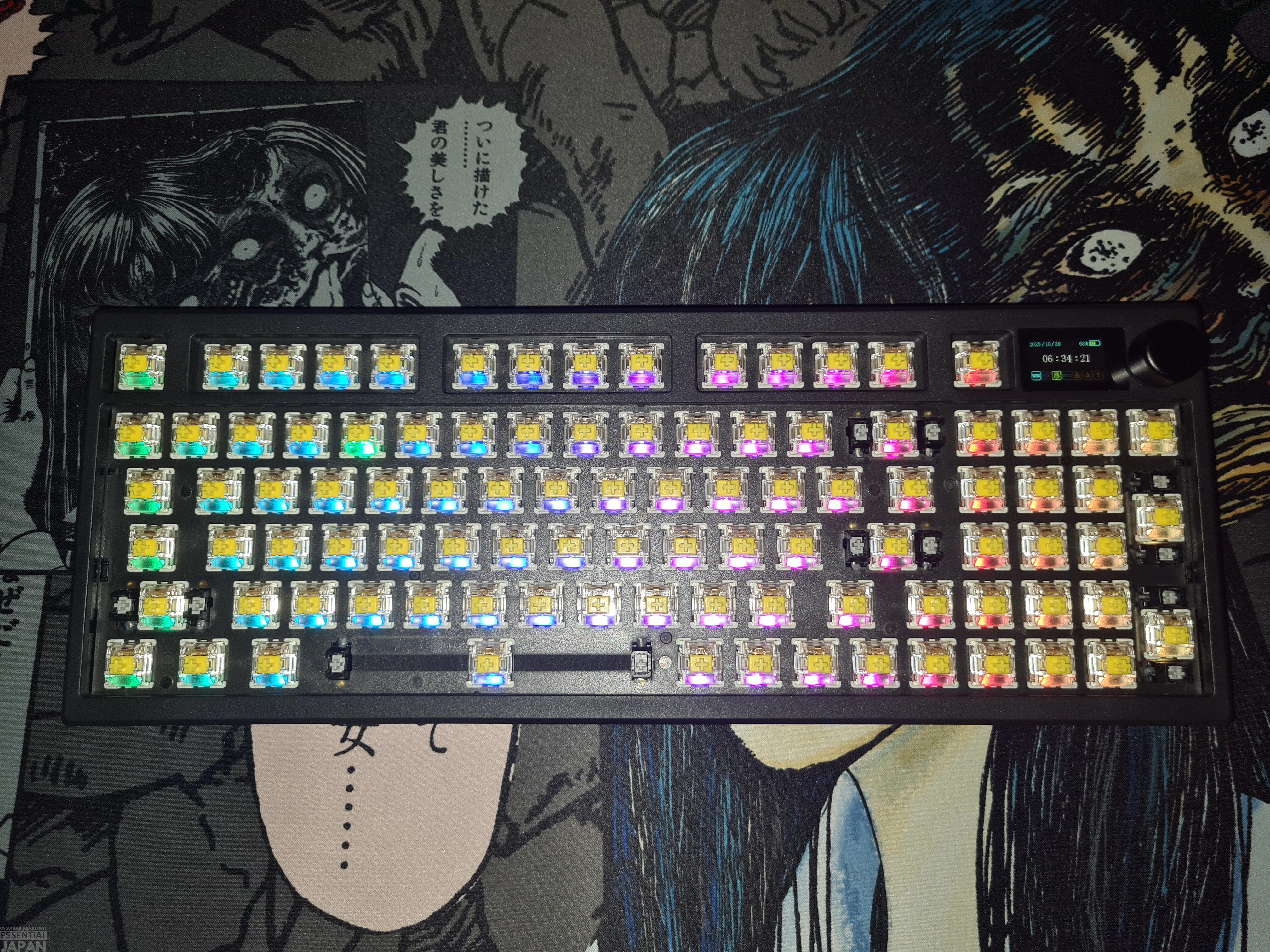
The 96% layout retains the number pad, function row and most of the functionality associated with a full-size keyboard while compressing the spaces between different key groups, making it considerably easier to accommodate alongside a large mouse area.
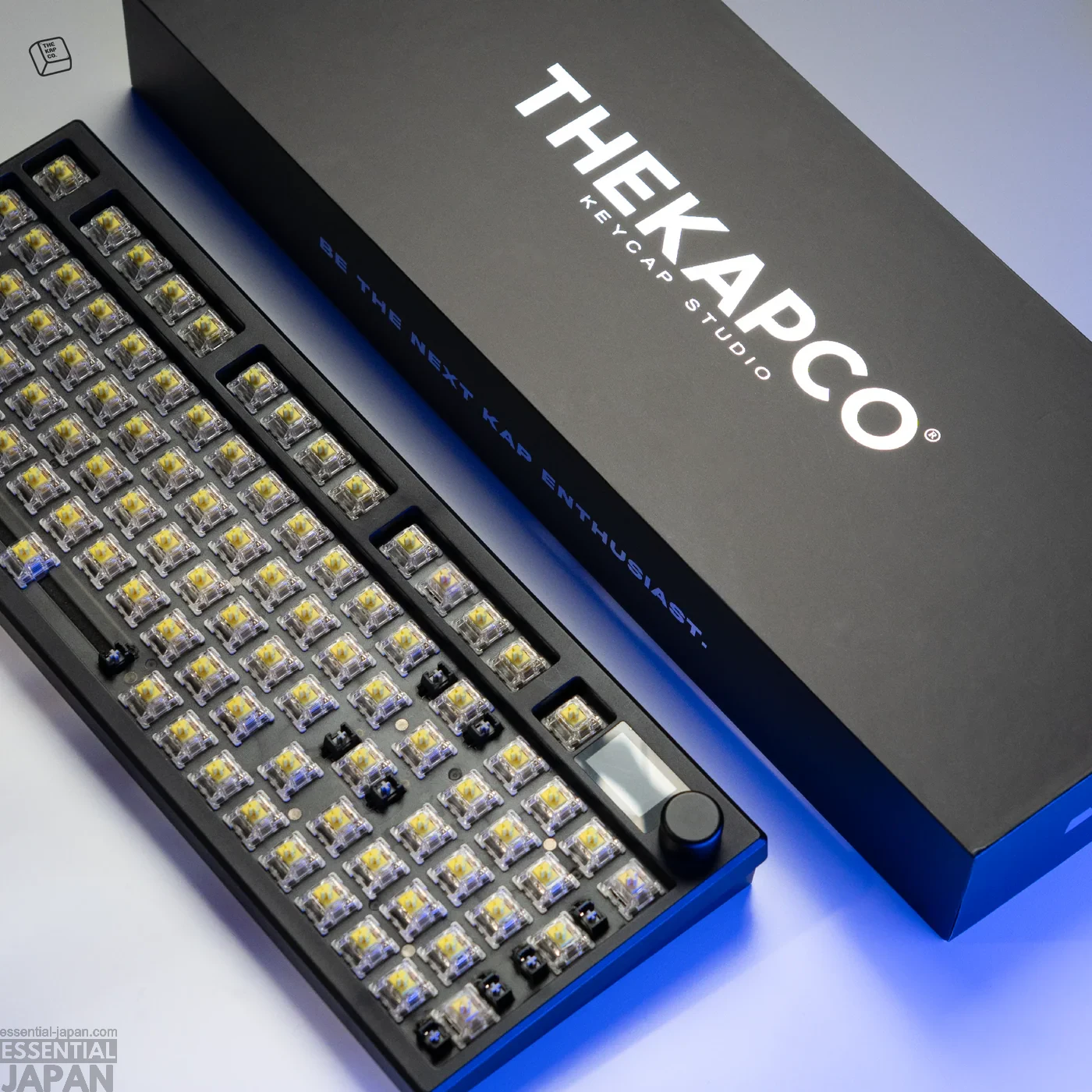
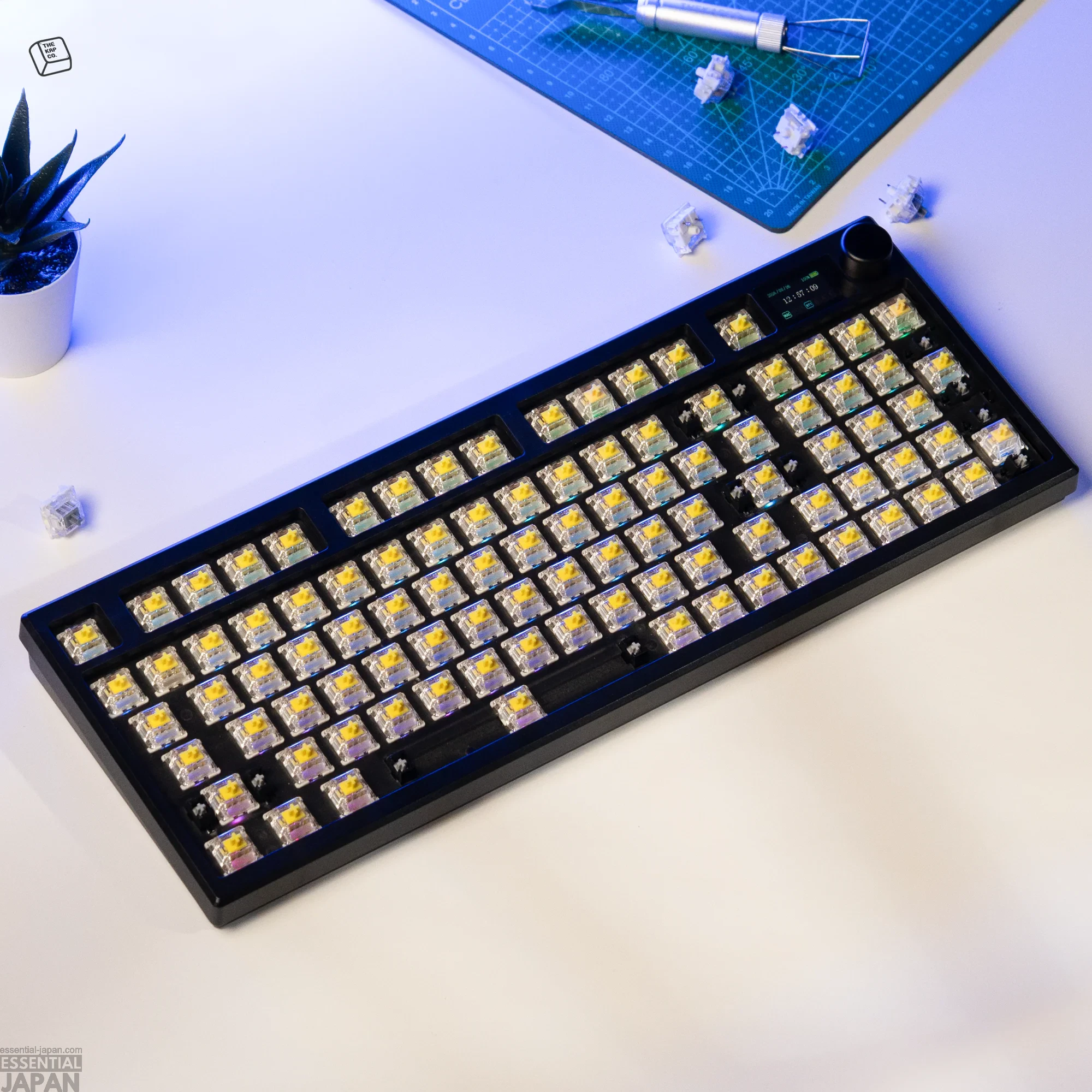
It works particularly well with the Tomie deskmat because the relatively compact footprint leaves plenty of the artwork visible while preserving a dedicated number pad.
Internally, the PLAY 1800 uses a Poron gasket-mounted structure rather than fixing the typing assembly rigidly against the case, giving the board a more controlled and cushioned response when typing.
The gasket system is supported by EVA plate foam and a separate PE foam layer, while the stabilizers arrive pre-lubricated.
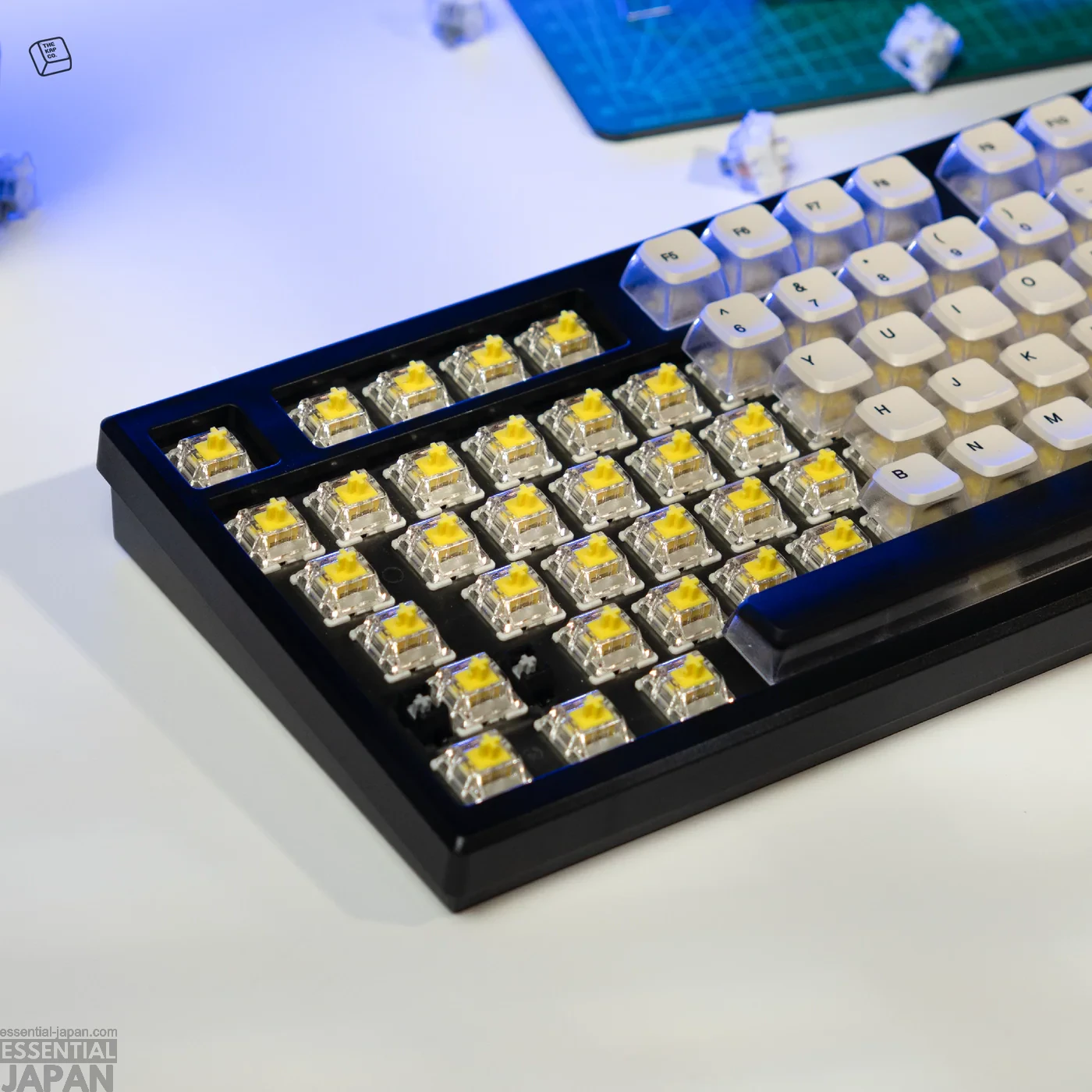
Taken together, those elements give the keyboard a refined acoustic profile, reducing the hollow resonance that can make cheaper mechanical boards sound noticeably thinner.
The result is a satisfyingly controlled typing experience that complements the higher-quality feel of the Tomie keycaps particularly well.
The PLAY 1800 also uses a hot-swappable 5-pin PCB, meaning compatible switches can be removed and replaced without soldering.
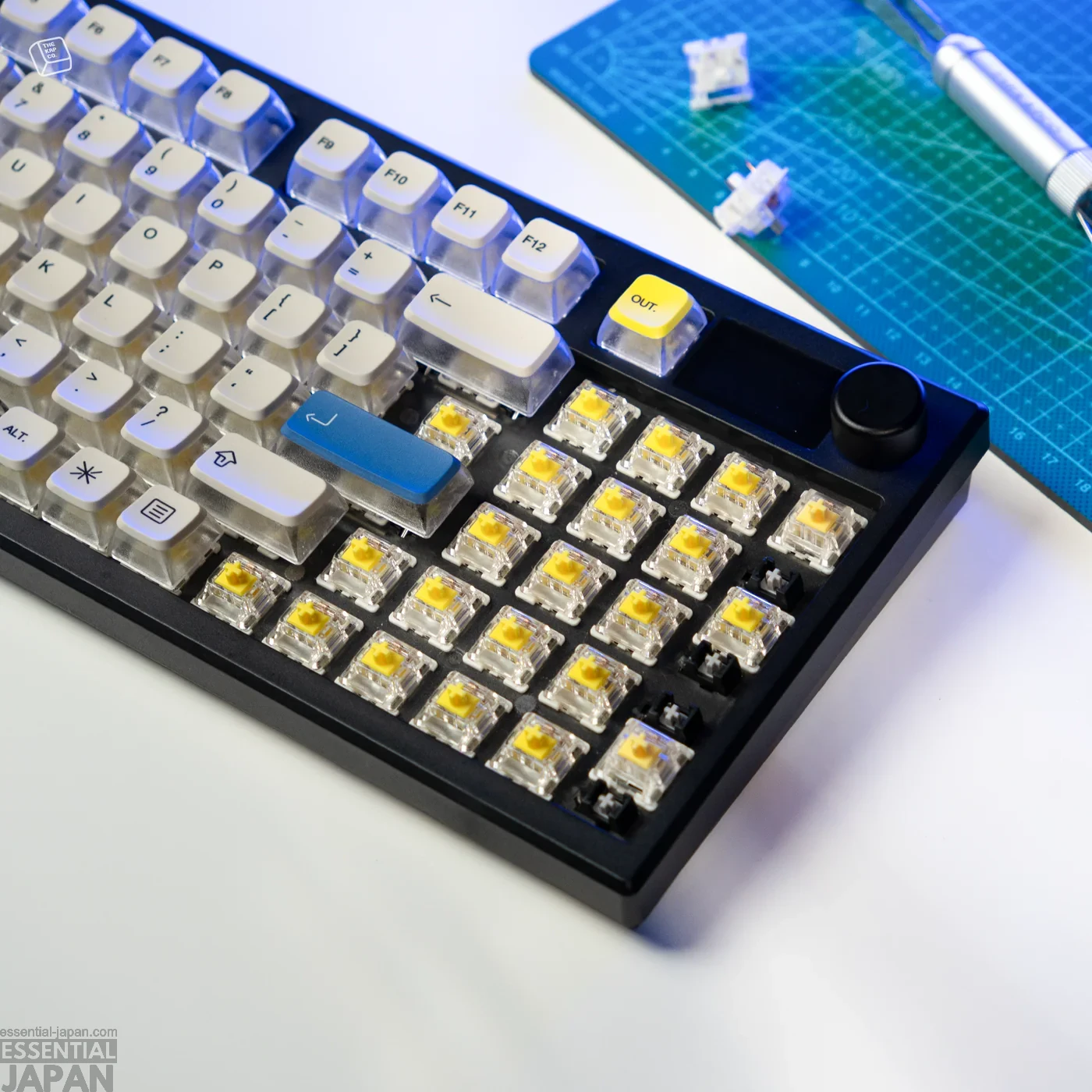
That immediately makes the board more useful as a long-term platform, as anyone who later decides they want a heavier linear switch, tactile option or completely different sound profile can change the switches without replacing the keyboard itself.
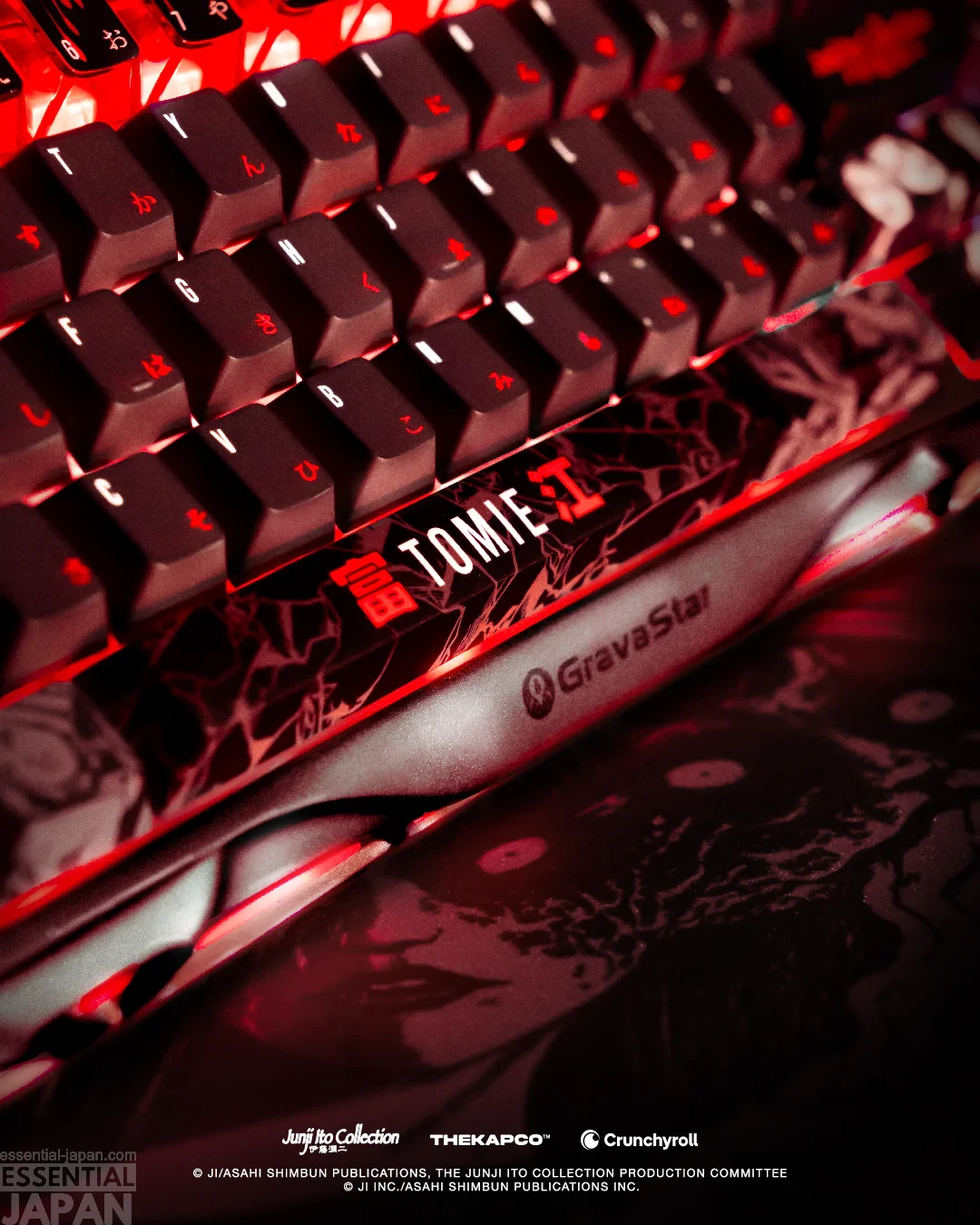
South-facing RGB LEDs are another sensible choice, particularly when using enthusiast keycap sets, with the orientation providing good compatibility with the Cherry-profile Tomie caps.
Connectivity is equally flexible, with wired USB-C, 2.4GHz wireless and Bluetooth modes supported alongside a 3000mAh internal battery.
The ability to move between a desktop connection and wireless devices without changing keyboards is useful in practice, while compatibility with both Windows and macOS prevents the PLAY 1800 from becoming unnecessarily tied to a single platform.
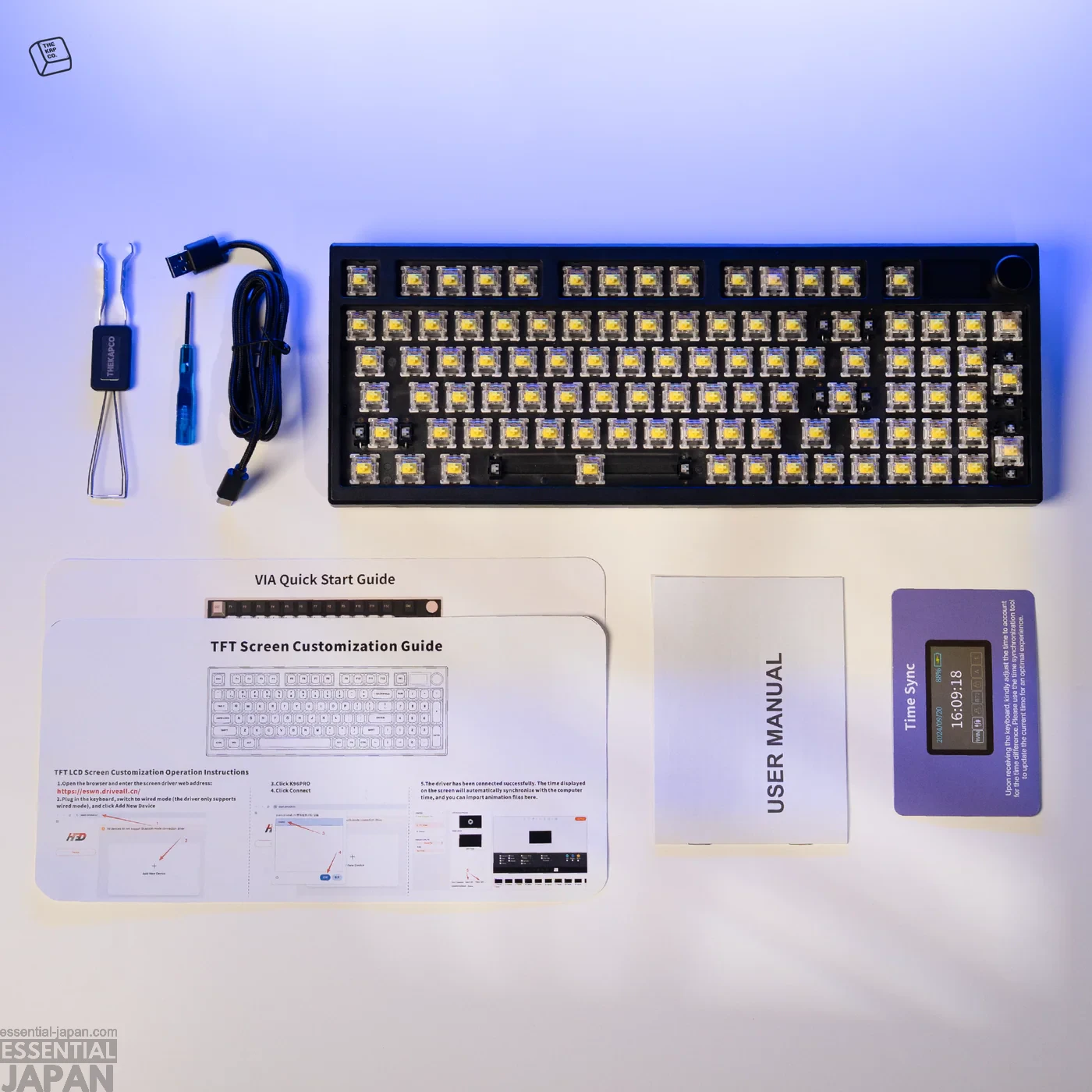
VIA support adds another important enthusiast feature, allowing keys to be remapped and the layout customized without being locked into a basic fixed configuration.
A multimedia control knob sits at the upper edge of the board alongside a small LCD display capable of showing battery level, date, time and connection information as well as custom GIFs.
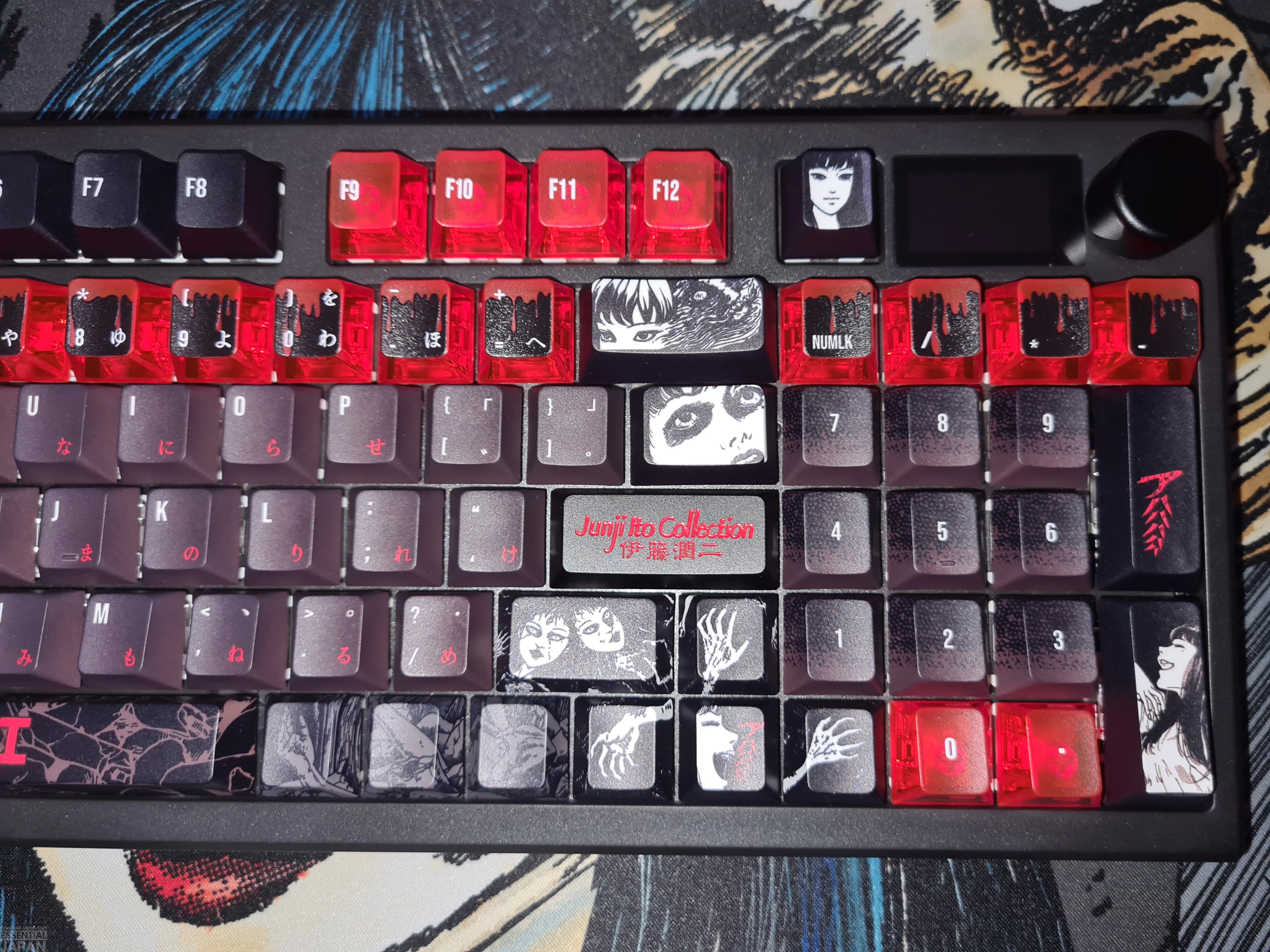
The screen could easily have become a novelty, but custom imagery makes considerably more sense when the keyboard is being used as the foundation of a themed setup, allowing the display to potentially complement the Tomie keycaps without being part of the collaboration itself.
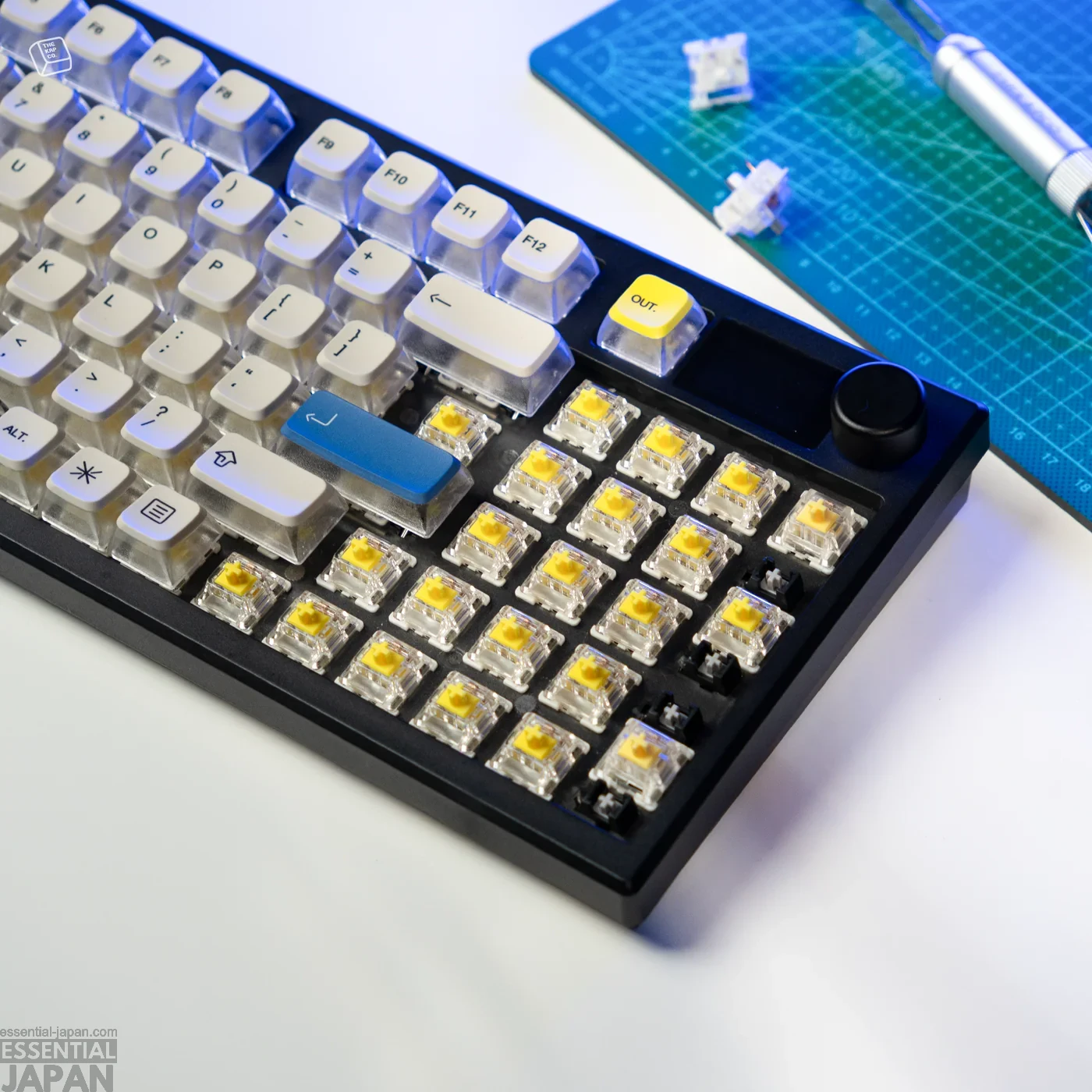
The PLAY 1800 stands on its own as a strong mechanical keyboard, with enough enthusiast-oriented hardware and customization to make it far more than a convenient platform for the licensed keycaps.
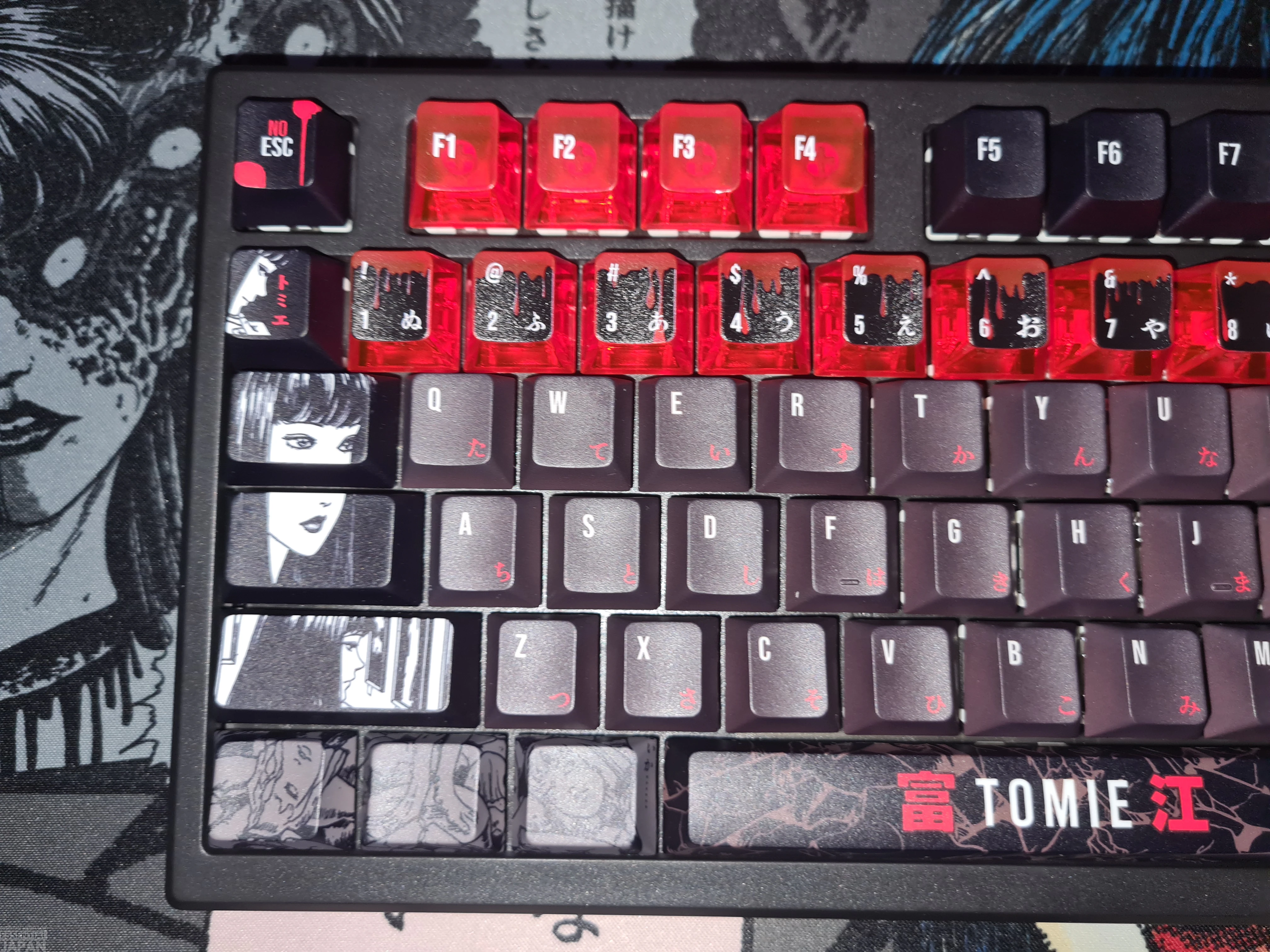
The PLAY 1800 is priced at $129 separately from the collaboration, while the Tomie keycaps cost $89.90, the deskmat $49.90, mousepad $29.90 and limited single keycap $39.90, with each available exclusively from Thekapco’s official website.
Taken as a whole, Thekapco’s Tomie range works especially well for Junji Ito fans who want licensed products that can become a permanent part of their everyday computer setup.
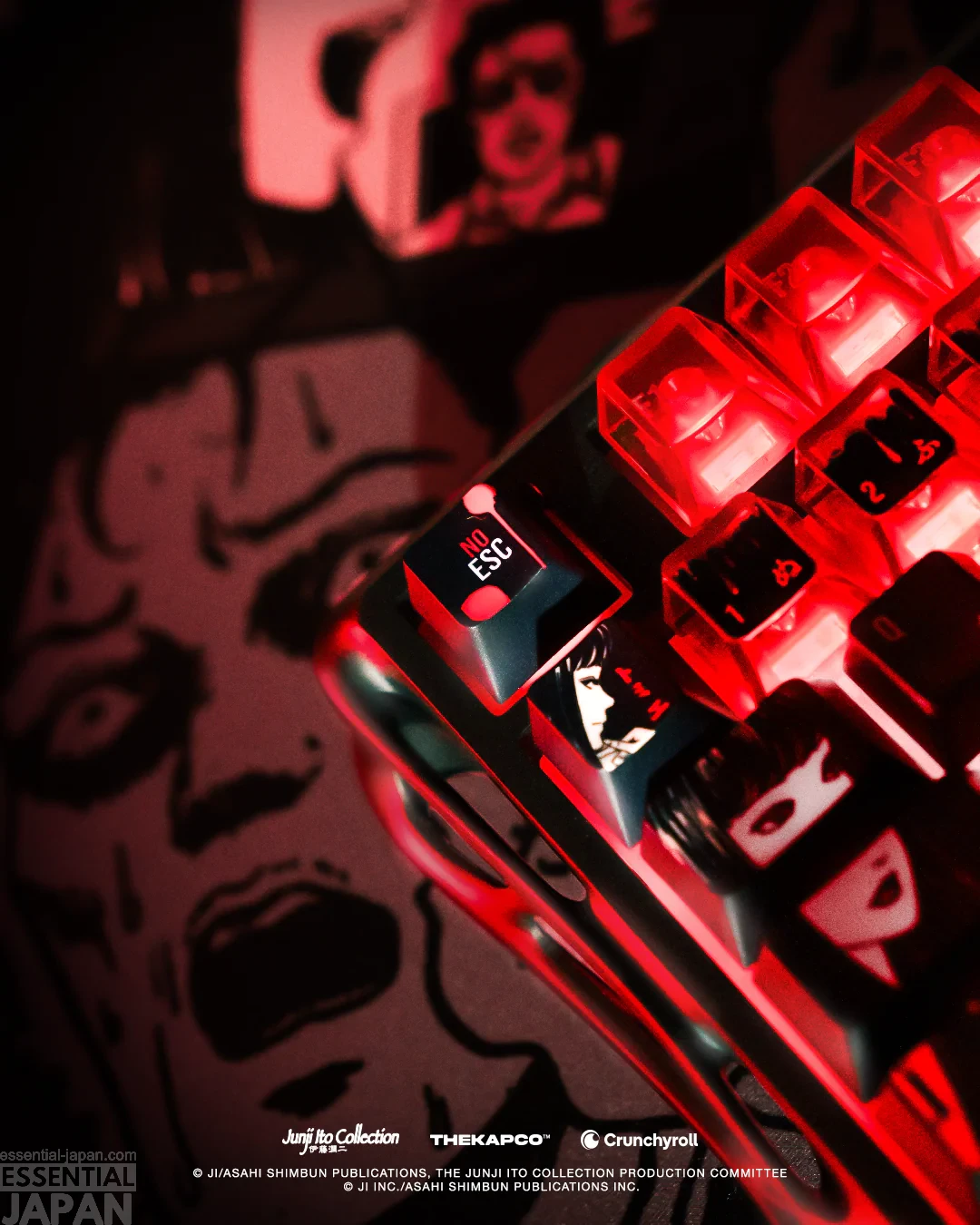
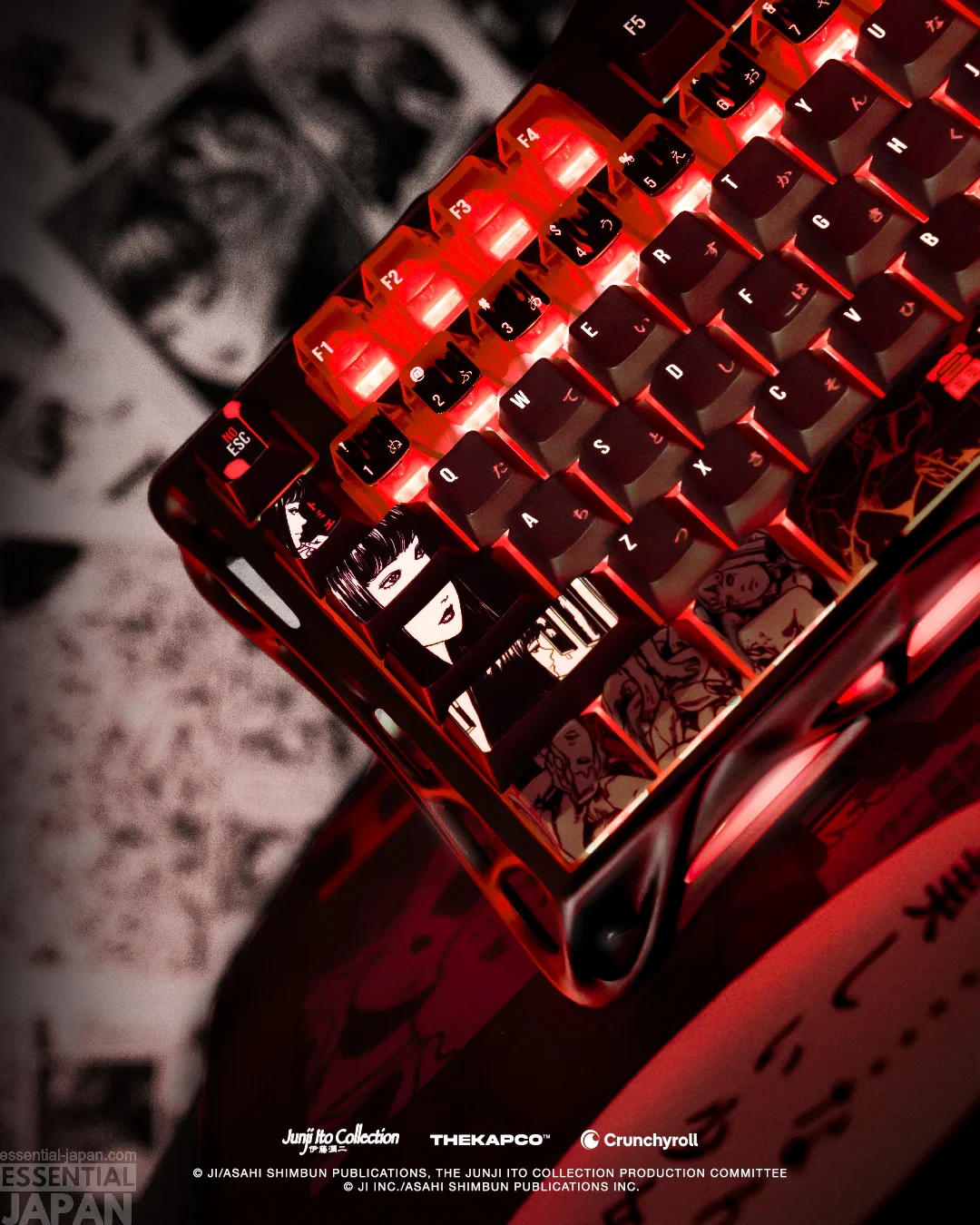
The keycaps are high quality, the aluminum elements provide genuinely premium touches, and both desk surfaces combine durable materials with artwork that remains visually impressive across a larger workspace.
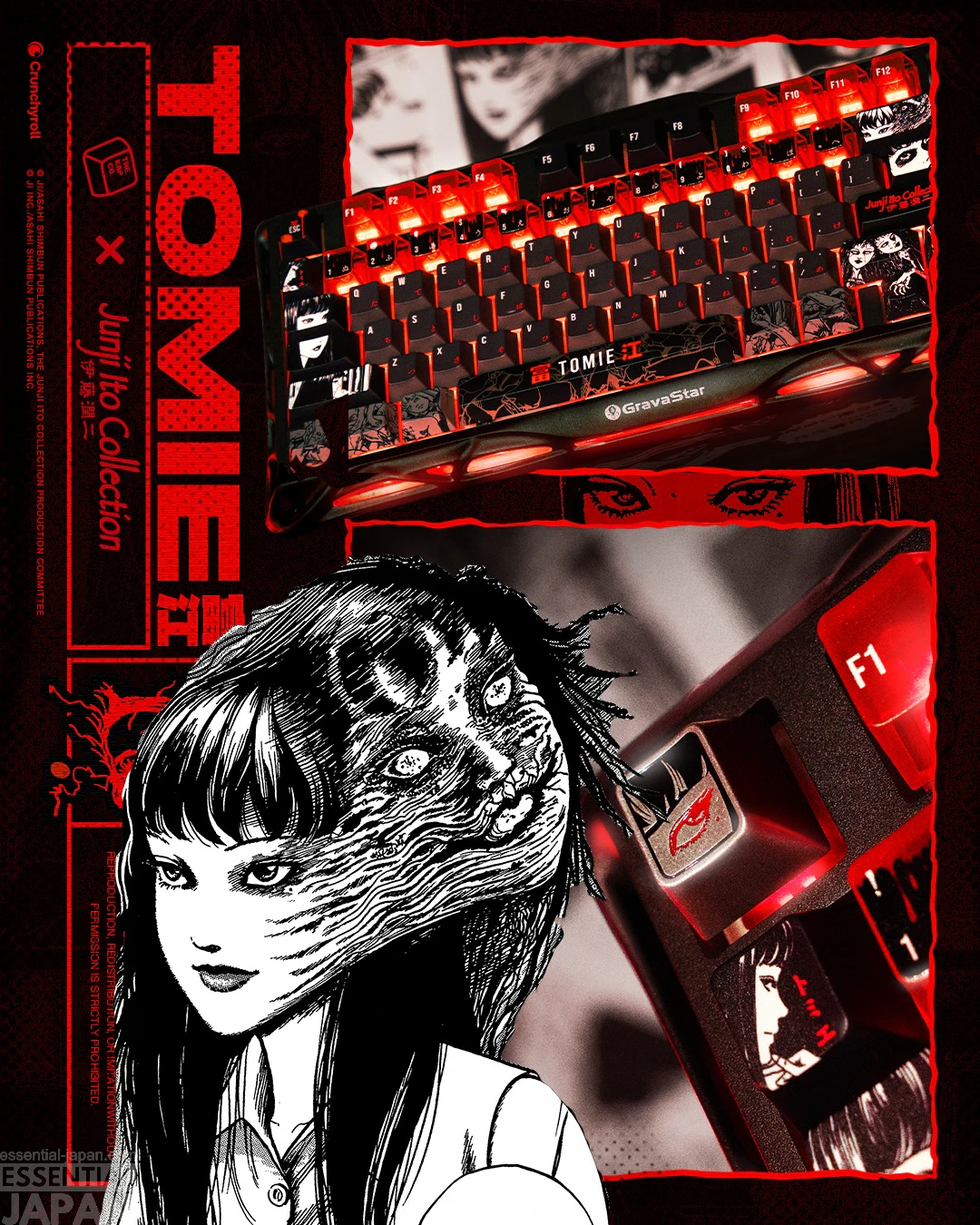
The separately sold PLAY 1800 complements the collection particularly well, pairing a compact full-featured layout with hot-swappable switches, flexible connectivity and enough customization to suit a wide range of preferences.
The artwork is what immediately makes Thekapco’s Tomie collection stand out, but the quality of the keycaps, materials and desk accessories is what sets it apart from other licensed collaborations.

If you enjoyed this article, you can see more from us directly in your Google feed by adding us as a preferred source.
This post may contain affiliate links, and Essential Japan may earn a commission if you purchase through them.